Into the stillness
15 min read
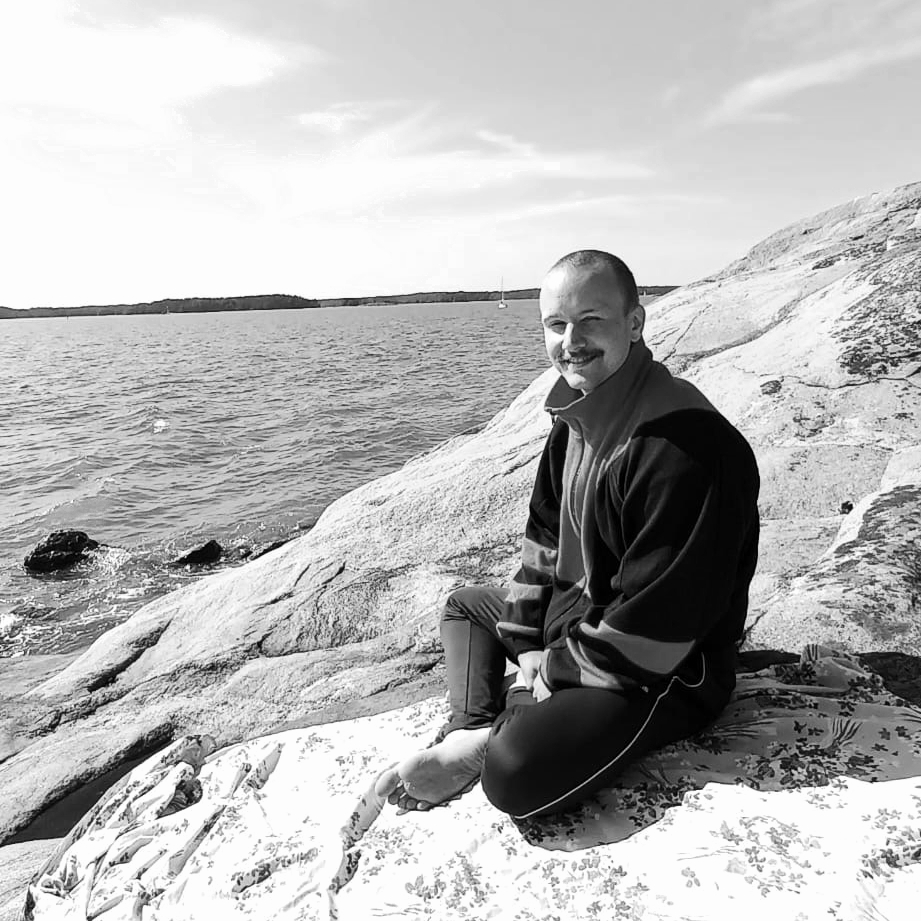 Six months before the fifth retreat.
I arrived at my first retreat carrying a lot on my shoulders. A firing from work that made me bitter and sad. After first retreat I understood my part in it.
Heartbreaks that had left grief behind and something physical. Also later I understood my role in it. I could feel the grief in my chest, not metaphorically but literally, like shapes with edges. I suffered from a gnawing loneliness that I neglected and shooed away and numbed with pornography.
I didn’t know what to expect from ten days of silence. That not-knowing turned out to be the best possible place to be. I just knew I desperately needed it.
Many ask me about the retreats and I don’t know what to say really. Should I talk about vipassana the technique or Dhamma the law of nature? At the same time, there’s the practical matters and of course the emotions, especially fear. Fear of sitting ten days, fear of silence, fear of own thoughts and emotions, fear of no contact, fear or this and fear of that. It’s difficult to argue or turn around a mind that is fearful and not ready. It’s quite common to have fears and I’m no better at it.
Then there’s the rules and the restrictions. No talking, no touching, no phones, no reading, no exercise, no substances. Noble Silence they call it. You become, functionally, a monk. Believe me, these are for your own good.
When people hear this, most of them recoil. That’s not for me. I don’t have time. I don’t like this. I have too many thoughts. I can’t sit still. Waste of time. They reach for something easier, a one-day workshop, a meditation app, a motivational quote, contemplative meditation or any other activity that “acts” like meditation — something you can do without giving anything up.
I understand it. I’ve tried all that. But vipassana is not stress relief. It is not emotional literacy training. It is something closer to a systematic investigation of how mind and body constitute your experience of being alive. That investigation requires time, stillness, and a willingness to be uncomfortable.
And isn’t that grand? That you can investigate the very consciousness in you that you get to witness. After all, it’s the grand theatre of your life, and you might even get to see “behind the scenes”, nondualism. Isn’t that brilliant? Isn’t that strange?
I don’t think I like mindfulness applications or exercises. Sorry my “extremism”, but I think they are a Western fabrication stripped of anything that has even a particle of Eastern notion. In fact, these methods won’t let you penetrate to the depths of consciousness. They are tailored for short-term benefits. They have very different goals and that’s alright. I’ve studied mindfulness and the scientific research proves their efficacy and benefits, no doubt. But it’s not the same. Not even close. They are light years apart.
When I tell people about vipassana retreats, I no longer try to persuade them. You cannot argue someone into understanding what vipassana constitutes, any more than you can debate someone into knowing God, or convince someone what Bitcoin means through a lecture. It has to be lived. It has to be experienced. You need to give it a shot and try it yourself. Nothing I say may click for you.
This is also why the retreats are funded by donations and run by volunteers. Compulsion at any stage, from doing it to advocating it, would defeat the entire point. You can’t force it. There’s no evangelism in it. Everything good comes in own time, in its own design, and own volition.
Even if I shared my wisdom and experiences of how great it is, the experience is completely different for everyone. There is no point comparing experiences nor even to talk about them. That’s why even reading this blog post is kind of useless, I think.
Still, I’ve noticed similarities and patterns in how people receive it. When people receive it fully, openly and nonjudgmentally, people radiate such joy and confidence in life. It looks as though they are relieved and they see clearly now. Vipassana is an ancient Indian language and means “to see things as they really are”. And that’s all there is to it. You see, and when you see, it changes your life.
I’ve also seen those who have so much inner opposition and mental friction that the benefits are not accepted. Then, indeed, the meditation retreat is waste of time. Not because vipassana as technique doesn’t work, but because you don’t allow it to work and perhaps you were not ready to meet yourself. That’s just how the mind is.
It’s similar to what Christians in the church and the Bible say. If you come to God with a hardened heart, the grace is there but you cannot receive it. The seed falls on rocky ground, and not because the seed is bad, but because the soil won’t let it take root. That’s the Parable of the Sower. The teaching, the technique, the grace, all of it is available. The question is always what kind of ground you bring.
The best way I have found to describe what the practice does is through versions. Before my first retreat, I existed at what I now think of as v1. In here I experienced sensations as one large, undifferentiated mass across the body, vague and gross and blunt. As the retreats accumulated, the body became more sensitive, and individual parts began to speak in their own distinct voices. That is v2, then v3, and further.
At v1, I was struggling alone with addictions, with my thoughts, with my daily habits, with cognitive dissonance, with relationships, with myself, with work, with my consciousness itself. I reserved my patience, kindness, presence, and all there is to live a good life, to only the good moments.
And I noticed that, and I tried to reverse that. But it was just so bloody hard. I was weak and didn’t know how. Vipassana reversed the direction. Otherwise, I was living my life on automatic. Time passed quick. Work was just something to push through day to day and not really something to enjoy. Soon enough this pattern expanded to all life areas. I only lived some moments but not really on the whole.
I’m sure you can relate. It’s quite human for some reason to live on the same gears, and perhaps even increase the gears. To fill your life with distractions and to be constantly pushing through. Tiktok, social media, workaholism - you pick your poison. It’s endless and tiring.
Back to the versions. Inevitably, Buddha who taught vipassana spoke of a point where sensation is perceived with something like the speed of electrons. Crazy I know. This is the total disintegration of the boundary between body and mind. I have only seen a glimpse of this progression, and it is enough for me to extrapolate the direction. However, the danger at each level is false satisfaction where one settles into a version and calling it the final destination. One must stay curious and open for there are always deeper layers, deeper levels of consciousness.
I found the first retreat unexpectedly joyful. At one point I said something crass to a volunteer, a comment about the experience being “hell of a fun”. I watched his face shift in immediate horror. People in deep practice are genuinely more sensitive, which is why the bluntness of ordinary speech lands differently when your nervous system is this awake. I hadn’t understood that until I saw it on his face. I stopped cursing as much after that.
After the first retreat, I changed and I stopped many things. In Christian words, I repented. I became more forgiving toward parents, my brother, myself, of past romantic relationships. I broke up from a girl with whom we had an open relationship then that didn’t work for us. I encountered parts of myself I didn’t like: cruelty, nihilism, and reflexive contempt I had mistaken for intelligence. I stopped watching porn. I stopped drinking alcohol and going to bars and night clubs. I quit social media. I understood, for the first time in a felt rather than conceptual way, that people are not born hard and cruel. Hardness is a response to pain that was never processed.
I found love. I found out through experience that people are born good, but the world makes some of us slowly hardened, evil, ignorant, careless, and nonchalant. Certainly the Christians claim even further that we are born sinners from the get-go. I know I am broken. I don’t know about how that came to be, but perhaps Jesus is right. But whatever essence or soul or smaller part there is in us that makes us part of the whole, part of the One, or the God, we do come and emanate from something that is good. Therefore, there is something good in us, even though we might not see or feel it.
Upon realising this, my body reverberated, and I let go of something. Tears came and I couldn’t sit still anymore. I felt relieved and at peace after that. Then I knew the power of vipassana.
After ten days many things were no longer enormous and annoying. A person smacking food mouth wide open, winter cold on my bare hands, crickets chirping at night or someone snoring next to me, someone smoking a tobacco in front of you, someone talking loudly behind you in a bus, an uncomfortable chair and so on. None of it feels irritating anymore. It just is and I observe it. Is this what it is to be a golden labrador? Even tinnitus and bruxism became my friends. Now I love and enjoy and laugh at these things. In fact, bruxism has gotten much easier over the meditation retreats.
I also learned that body parts have memories: shoulders hold protection, hands hold creation and destruction in their grasp, the stomach holds happiness and disgust, heart is where love lives, and lips get tingly and fat when there’s sexual arousal. Who knew that our most famous writers of all time perceived their sensations in such an intensity that they could describe such things in such detail in the stories they told?
I helped other meditators on second retreat as a chef. I meditated about three hours a day and read a lot of books and made food for the other meditators. I made many fiends there and had great conversations. We were supposed to have a Noble Speech, but it was more like a Noble Chatter. Meditators are not allowed to talk but we could. However, we had to keep it to the minimum and limited to what we were doing. We had so much fun with each other so it was hard not to get to know each other and talk.
Still, even though there wasn’t a quantity of meditation, there was quality of meditation. I meditated seriously and observed subtler movements of craving and aversion. It’s like any biological organism: we seek rewards and fear punishments. I saw how the mind reached and recoils even before a thought had even occurred. I started to see how much of what I had called preference, or personality, was just this: a pattern of micro-grasping so fast it had always felt like identity.
I learned to let go for first time in my life. I had strong feelings toward someone, perhaps you could call it love, and regardless I had to let go of her and those feelings. I learned a little more about how to love without being attached. I begun to see how love doesn’t need to be obsessively grabbing and possessive. I used to love with a lot of attachment, but now I see how love works in the way how God loves us.
By the third retreat (or second sitting retreat) I came with expectations. I wanted it to be as cool as the first one half a year ago, and cry. I wanted to cry because I wanted to open up myself and learn to let go. I was massively disappointed but I also learned that this was part of it as well. Every retreat is different. Every day, every hour, even every second and moment is different from the other. However, I learned to let go of that expecation on the very last day and moment, and I cried. I tried to push too much and force something to happen. This is not the way.
I also learned to sit in aditthana, which means strong resolution to sit down an hour without moving an inch. Even if it is uncomfortable, the back hurts, or the nose and scalp is itching. Indeed, an hour of sitting without moving was no longer insurmountable. I was ecstatic because I didn’t know how to do that before and I didn’t think it was possible. These days it’s easy to do that at home.
At first I was really afraid of it. What if my back really hurts and I am breaking something? What if, what if. I let my fear rule me, but then I made the strong resolution to sit and see.
The purpose of aditthana is to really observe your sensations with such clarity. It’s not there to make you feel pain or be in great pain. Actually, paradoxically, the pain disappears if you let go of it during the sitting. Unbelieveable but true if you observe it yourself.
Something else also crystallised during that third retreat, namely the structure of attention itself. There is a difference between focused attention, which narrows and isolates, and the wider peripheral awareness in which attention moves.
I noticed that only this broader awareness can tell you the overall quality of the mind, whether it is calm or agitated, open or contracted. Focused attention, on the other hand, cannot observe itself; its movements are themselves mental activity, and you cannot step outside them to watch.
The fourth retreat brought something I had not expected and cannot fully explain: an encounter with what I can only call God. It arrived without warning, without my seeking it exactly. It was not a vision. It was more like a quality of presence so complete that all the ordinary static of selfhood simply wasn’t there. Then it was gone. I am no longer the same person who sat down before it happened.
During that same retreat, my attention had become so precise that I could feel the plaque between my teeth. It wasn’t a vague discomfort but something specific, pressured, almost architectural? I started immediately cleaning my teeth inbetweens afterward. It seems that the meditation practice does not stay on the cushion but follows you even into the bathroom.
I also learned, through a conversation with one long-term practitioner at the site, that equanimity is not a fixed destination. Let me explain what equanimity is. It means the balance of mind where there is no craving or aversion. Equanimous mind is calm, serene, and spacious. The more equanimous you are, the less you react. Even though anger arises, you don’t react upon it. Even though you might be itchy, you do nothing. Apparently people who have sat dozens of retreats are still discovering what equanimity means for them, in their lived experience. I found that super fascinating. There is still so much to discover.
After the fourth retreat, I got engaged. The silence had made it obvious that there is a woman I love and no good reason to wait.
The fifth retreat was the hardest, and not in the way the earlier ones had been hard. For one, I damaged my lower back and got a herniated disc on October 2025, which meant that sitting for hours was no longer a question of mental discipline but of genuine physical suffering. The pain was extremely bad and I couldn’t sit in a bus, a sofa or even a bed at times.
There is a difference between discomfort the mind can work with and insurmountable pain the body simply produces. Luckily I got a stool and a wall to lean onto. The retreats are hospitable and they take injuries into account. Indeed, meditation didn’t hinder my back recovery nor did my back pain gave an excuse to not meditate.
On the sixth day, I saw clearly my pain in my chest. I was vaguely aware of it on the first retreat but only now it showed itself in full. It used to be a vaguely uncomfortable pressure and anxious feeling on my chest, but when my attention concentrated I saw it’s full nature: a finger-sized pain in the chest that I wanted to claw away.
The pain had no memories, no reactions, no nothing. It was like I had given it a reason and a room to stay but I didn’t quite follow up why the pain decided to stay. Indeed, it’s almost like anxiety but not really. It’s almost like grief but I can’t say. It’s constant and it doesn’t allow me to breath properly. I am still sitting with it to see what it is.
Vipassana has changed the depth at which I experience being alive. Reactions and emotions used to be vague and diffuse but now all of it has location, texture, and timing. I know where guilt and anger lives in my body. I can feel it arrive before I can name it.
Funnily, even though my life has more richness to it, the more difficult experiences tend to be also more intensive. It goes both ways. However, I’d rather continue living my life with intensive awareness and presence than constantly reactive numbness in zombie-like sleep. Luckily, such things are visible early enough that I can choose how to meet them, rather than simply being carried by them.
Sixth retreat is in three months. See you then. Be well.