Bitcoin Activism
31 min read

TL;DR: Here it is! My latest post on Bitcoin. I had this thought long ago, about four years ago, that Bitcoin could be a social movement. I mean, I studied social psychology so I saw some recurrent themes. Well, after four years, I now wrote it and added a lot to the list. Bitcoin is not a movement per se, but small micro-mobilisations that happen here and there, that just happen to use Bitcoin. People come from veeeery different backgrounds, so there are a lot of different actors and agendas at play. The post is long and your attention is short, and you’re most likely not that interested in Bitcoin. Alas, AI is more interesting (ps. me too!). Well, check the photos at least, and skim here and there. I don’t think anyone has ever written about this topic yet, so it is o r i g i n a l writing! :D
On the last day of Baltic Honeybadger in Riga, in 2024, I walked out of Jack Dorsey’s talk halfway through. Not because the talk was bad. After a few days of being talked at, I wanted to talk with people.
Upstairs, I found a wall of pink posters: Russia, Nigeria, Kenya, Cuba, China, Burma. Each told a short story of a regime meddling with its people’s money. I photographed every one of them, and wrote about that week without saying anything about them.
The idea of a “Bitcoin movement” had itched me since I was choosing a topic for my Master’s thesis. A friend said it was impossible: how can money be a movement?
That’s why I photographed the posters. I thought I’ll use them one day. The question then is: were they conference decoration, or the visible edge of a movement? (Answer: Neither.)
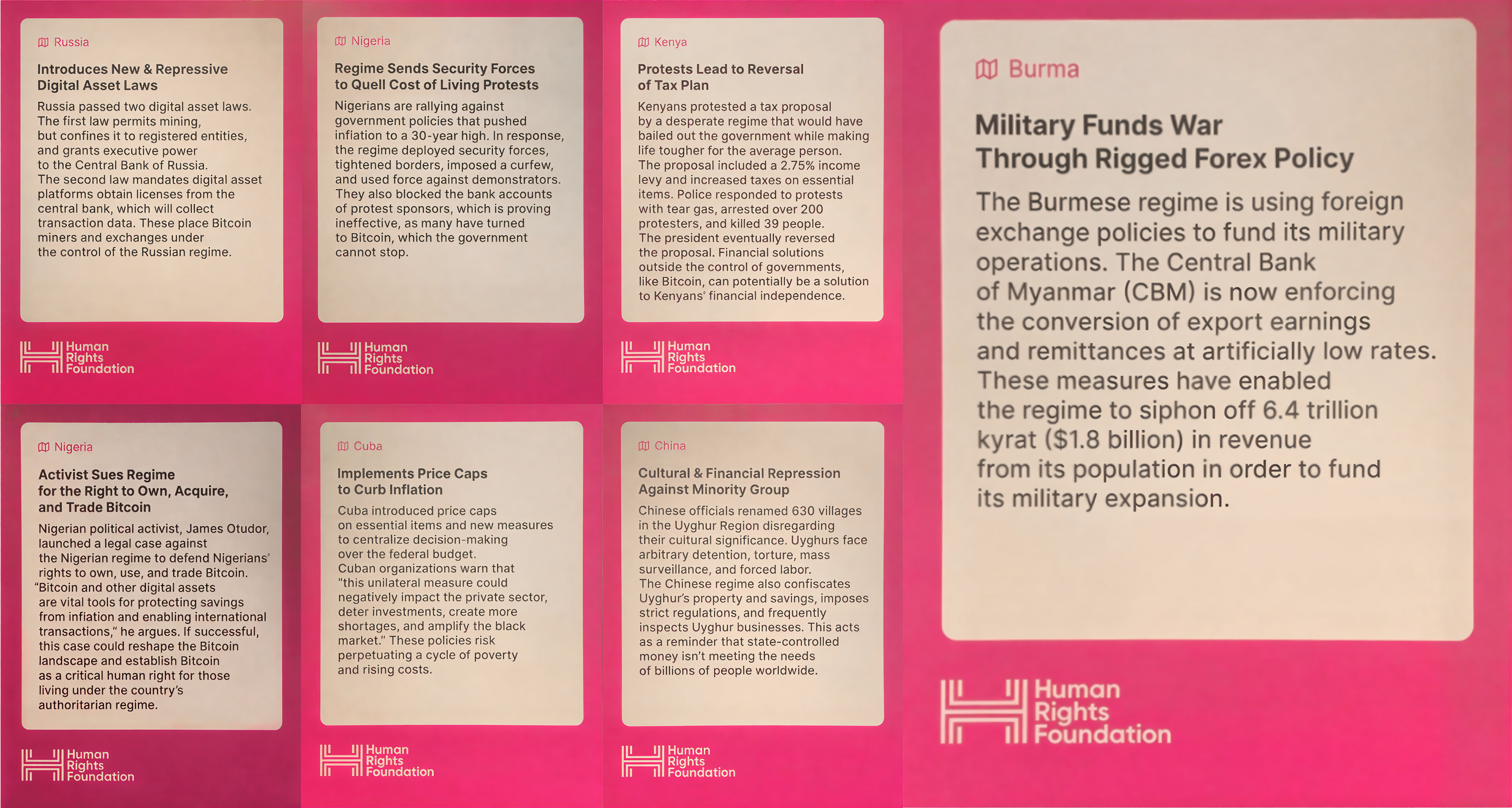 Human Rights Foundation posters on financial repression. Baltic Honeybadger, Riga, 2024. Photo: Ville Kokkomäki.
Introduction
Today different people use and advocate Bitcoin through different actions in different places for different reasons (Table 1). I thought this might constitute some kind of unified social movement. If not partially physical, then at least fully digital.
At first glance Bitcoin appears to satisfy some of the conditions for a movement. It has persistent online communities, shared narratives (“not your keys, not your coins”; “freedom money” [1]), and a global network of participants who disseminate information, support each other, and get together around recurring events.
However, there is no unified set of demands, no structured organisation, and no collective identity beyond minimal symbolic cohesion — the ₿ logo, memes, “bitcoiners” and “nocoiners”. Bitcoin is not anchored in a common grievance or a singular target. It is an open tool [2] that very different people use for very different ends: profit, ideology, survival under financial repression, or experiment.
Be that as it may, there is still a constellation of micro-mobilisations, where activism emerges sporadically, situationally and tactically. The actors differ in position and in how they think change happens. What makes it all Bitcoin activism is that each uses or promotes Bitcoin against financial censorship, for policy change, or as an alternative economic institution.
Activism here means acting on purpose to change something: a law, a practice, or who holds power over money. Using Bitcoin is not activism by itself, but under repression the same act can become one: a donation received after the bank has frozen your account is defiance.
To sort them, I use Michael Beer’s catalogue of civil resistance tactics [3]. Building on Gene Sharp’s famous 198 methods [4], Beer counts over 300 nonviolent tactics and groups them into three families:
- protest and persuasion (you show),
- noncooperation (you refuse), and
- intervention (you disrupt or you build).
In my thesis I argued that Bitcoin can serve all three: a message in a block is protest, leaving the state’s financial system is noncooperation, and an alternative economic institution is intervention [2]. So many cases fit more than one family. When the Feminist Coalition switched to bitcoin, they refused a frozen bank and used a new payment channel at once; BitChat users both refuse a shutdown and build a network around it. I place each case by its main mechanism: whether people mostly stop doing something, or start something new.
Table 1. Bitcoin activism, sorted by Beer’s methods (updated October 2026)
| Method | Actor | What happened | Status |
|---|---|---|---|
| Banners, posters and displayed communications (54) | HRF; Christian Langalis; Phneep; Felix, The Core (Nairobi); Cryptograffiti | Posters on financial repression at conferences [5]; “Buy Bitcoin” sign behind Janet Yellen, 2017 [6]; printable propaganda posters [7]; “Vote Bitcoin” at Kenya’s Gen-Z protests, 2024 [8]; billboards in all 12 Federal Reserve cities, 2021 [9] [10], and a “Be Your Own Bank” van at the collapsed Silicon Valley Bank, 2023 [11] | Mostly one-off |
| Public advertisements (101) | Block Inc. [₿]; Jack Mallers [₿] | “Bitcoin Is Everyday Money” tax campaign in D.C., 2025 [12], and “Bitcoin Does”, 2026 [13]; Times Square billboard: “No man should work for what another man can print”, 2025 [14] | Mostly ended |
| Wearing of symbols (57) | General | Bitcoin pins and clothing [15] | Ongoing |
| Assemblies of protest (14); marches (4) | Oskar Hassel; Dave Ridley | Three weeks every August outside the ECB, 2024–2026 [16]; “Bitcoin Gandhi’s” 24-day march across New Hampshire, 2021 [17] | Partly ongoing |
| Human banner (65) | Argentine Bitcoiners | Hundreds with orange umbrellas form a giant ₿, Buenos Aires, 2023 [18] | One-off |
| Digital video & audio art (81) | Anonymous Bitcoiners; Cryptograffiti | “Study Bitcoin” projected on the ECB and the Czech National Bank [19]; an augmented-reality print in which the dollar burns [20] | Sporadic |
| Stickers (62) | bitcoin.rocks | Free QR stickers placed in public [21] | Ongoing |
| Slogans and symbols (95) | Individuals; miners, developers | ₿ and “inflation is theft” stamped on banknotes [22]; headlines and arguments written into the blockchain itself [23] | Ongoing |
| Deliberately fake money (85) | Matthias Dörfelt | Block Bills, 64 banknotes generated from the Bitcoin blockchain, 2017 [24] | One-off |
| Newspapers and journals (103) | Timechain | The first Bitcoin art magazine [25] | Ongoing |
| Social media photo campaigns (75) | Internet users | Laser eyes, memes [26] | Faded |
| Sculpture (71) | Nelson Saiers; cities [₿]; artists | Cryptograffiti’s seed words on the US–Mexico border wall [27] and a 25-foot bitcoin on Bitcoin Park [28]; FractalEncrypt’s sculptures at BTC Prague [29]; Inflatable Bitcoin rat at the New York Fed and Jekyll Island [30]; Satoshi in Lugano, thrown in a lake and vandalised again [31]; the “21 Nodes” statues from Tokyo to Vienna [32]; a mirrored-face bust in Budapest [33]; the Kranj roundabout [34]; a town monument in Fornelli, Italy [35]; a planned monument in Buenos Aires [36] | Mostly standing |
| Singing (48); theatre (34); skits (33) | Tatiana Moroz; Wonderabbit; New York theatre; LABITCONF | “Never Give Up”, 2024 [37]; Prometheus, where the audience hunts for a hidden Bitcoin seed, London, 2025 [38]; Happenstance, New York, 2024 [39]; Control Total, a satire of a banker’s quiz, Buenos Aires, 2024 [40] | One-off |
| Teach-ins (92) | HRF; Bitcoin im Bundestag [₿]; Africa Bitcoin Community | “Bitcoin 101 for Activists”, Oslo, 2024 [41]; Bitcoin education inside the German parliament, 2024 [42]; a youth camp in Accra, 2024 [43] | Ongoing |
| Public speeches (104); letters of opposition or support (96) | Félix Maradiaga; Brazil’s Chamber of Deputies [₿]; Bitcoin Policy UK; Seoul Bitcoin Meetup; Satoshi Action Fund | A former Nicaraguan political prisoner on Bitcoin, 2024 [44]; a hearing on a Bitcoin reserve in Brazil’s Chamber of Deputies, 2025 [45]; a letter to the UK City Minister over Chase’s crypto block [46]; an open letter against the SegWit2x fork, with a boycott threat, Seoul, 2017 [47]; testimony behind Louisiana’s 2024 law protecting self-custody, home mining and nodes [48] | Mostly one-off |
| Petitions (100); walk and trek (11) | Swiss citizens; Free Ross; Free Samourai | An initiative to put Bitcoin in the Swiss National Bank’s reserves, 2025 [49]; the Free Ross campaign, which ended in a pardon in 2025 [50]; a pardon petition [51] and a prison run in Arnhem, 2026 [52] | One pardon, one pending |
| Method | Actor | What happened | Status |
|---|---|---|---|
| Withdrawal of deposits (144) | General; Collectif Sortie de Banque | Proof of Keys, every 3 January [53]; a French collective helping people leave their banks [54] | Ongoing |
| Consumers’ boycott (130) | Bitcoin users online; node operators; UASF supporters | #BoycottJPMorgan, 2025 [55]; node operators leaving Bitcoin Core for Bitcoin Knots in the 2025 spam-filter fight, from about 4% to over 20% of public nodes [56]; users who in 2017 threatened to reject miners’ blocks until SegWit activated, wearing camouflage “UASF” hats [57] [58] | Mixed |
| Refusal of government’s money (281) | Paralelní Polis; Mir Liponi; Martin Zandona; BitcoinFriendlySA; CeylonCash [₿] | A Prague café that took no state currency, 2017–2024 [59]; 11 days on Bitcoin only, Lugano, 2025 [60]; across Switzerland on Bitcoin only, 2025 [61]; a 12-month pledge to pay in sats, South Africa, 2026 [62]; workers paid in sats, Sri Lanka [63] | Mostly one-off |
| Civil disobedience of “illegitimate” laws (279) | Various | Using Bitcoin through Iran’s blackout [64]; running a full node despite China’s ban [65] | Ongoing |
| Method | Actor | What happened | Status |
|---|---|---|---|
| Distributing free VPNs and alternative apps (302) | Calle; Bobi Wine; protesters | BitChat during shutdowns in Nepal, Uganda, Iran and India [66], with Calle asking people to share it [67] [68] and Ugandan opposition leader Bobi Wine telling supporters to download it [69] | Ongoing |
| Alternative communication (258) | Airlift Airwaves; Pathos; Cryptobuyer; HKmap.live | Bitcoin-funded HF radios after Tonga’s cable broke, 2022 [70]; rewards for reporting political prisoners, Venezuela [71]; a Venezuelan node receiving the blockchain by satellite, without internet, 2020 [72]; HKmap.live, a live map of police positions during Hong Kong’s 2019 protests, kept running with Bitcoin donations [73] | Mostly ongoing |
| Alternative markets (282) | Mostro, Bisq, RoboSats | Peer-to-peer trading without intermediaries [74] | Ongoing |
| Alternative economic institutions (283) | Circular economies | El Salvador: Bitcoin Beach [75], Bitcoin Berlin [76], La Laguna [77], La Pirraya [78]; Guatemala: Bitcoin Lake [79]; Costa Rica: Bitcoin Jungle [80]; Cuba: La IslaBTC, Cuba Bitcoin [81]; Brazil: Praia Bitcoin, closed 2026 [82]; South Africa: Bitcoin Ekasi [83] and its Africa fund [84]; Kenya: Afribit [85], Bitcoin Githurai [86]; Ghana: Bitcoin Dua [87]; Indonesia: Bitcoin Indonesia [88]; Uganda: Starlight Elementary [89] | Mostly ongoing |
| Alternative economic institutions (283) | Aid and solidarity groups | Grants for fired Belarusian workers [90] and telemedicine [91]; Afghan women paid in bitcoin [92]; flood relief in Iran despite sanctions [93]; transfers to Eritrean refugees [94]; teachers in Yida refugee camp [95]; hurricane relief in Jamaica [96]; Sudan [97]; journalism under censorship [98]; donations when banks close the door, from WikiLeaks after Visa, Mastercard and PayPal cut it off in 2010 [99] and the Canadian trucker convoy in 2022 [100] to #EndSARS [101] to Navalny’s foundation | Ongoing |
| Alternative economic institutions (283) | Gridless [₿] | Mining on surplus power from rural mini-grids, Kenya, Malawi, Zambia [102] | Ongoing |
| — | SimpleProof | Timestamping copies of Guatemala’s 2023 election tally sheets [103] | Ongoing |
Notes. The number in brackets after each method, such as (54) for banners and posters, is that method’s number in Beer’s catalogue.
[₿] Institutional actors: businesses, city governments, parliaments and states. They use the same methods from inside the institutions civil resistance pushes against, so I count them as adjacent cases.
“We cannot expect governments, corporations, or other large, faceless organizations to grant us privacy out of their beneficence.”
— Eric Hughes, A Cypherpunk’s Manifesto, 1993
Ideological roots
It is useful to rewind a little to understand Bitcoin. While we do not know — and it doesn’t matter — who the creator of Bitcoin, Satoshi Nakamoto, was, we do know they were a cypherpunk. Cypherpunks arose in the early 1990s, and held that to limit governmental and corporate surveillance there must be tools for protecting privacy online. Their goal was social and political transformation. Today, most people who use Bitcoin are not aware of their principles, and some who are do not adhere to them.
Bitcoin was born in financial turmoil. The genesis block carries a newspaper headline about bank bailouts, a proverbial middle finger to the banks. Yet today its community extends far beyond the cypherpunks, to investors, developers, activists, and nation-states, each bringing their own agendas.
Notwithstanding, given that history and the failed attempts before it at making “an anonymous transaction system” [109], I’d argue that Bitcoin is not a value-neutral technology [110]. Nakamoto understood very well what its design could afford [111]. That does not mean Bitcoiners agree on which values it carries. (The long fight over spam filters, which I come back to below, shows as much.)
People who have fallen into the “Bitcoin rabbit hole” understand that it is not so much about Bitcoin as about what the status quo does — how the contemporary financial system fails us. Juxtaposed to it, Bitcoin makes one value personal monetary autonomy, verifiability over trust, rules without rulers, resistance to arbitrary confiscation, accessibility for the disenfranchised, and private transactions. Its fixed supply is a critique, too, of money created endlessly as debt.
That is the common goal, if there is one, and Bitcoiners have long had a slogan for it: the separation of money and state.
Looking at the cases in Table 1, though, the slogan hides three different roots. The first is cypherpunk: privacy as self-defence. The Samourai developers, Calle and BitChat, and the fiat-free café in Prague belong here.
The second is Austrian: sound money against the central bank. Langalis’s sign, the inflatable rat outside the Fed, the billboards in the Federal Reserve cities and the stamped banknotes argue against inflation more than against surveillance.
The third root is not ideological at all. The Feminist Coalition, Navalny’s foundation, Afghan women paid in sats and Ugandans before a blackout reached for Bitcoin because the money they had stopped working. Many of them would be glad of a fair state and a bank that keeps its doors open.
Some actors cut against all three. A state with a Bitcoin reserve is the opposite of separating money from the state, and Block or Tether are companies doing business. The separation of money and state covers the first two roots at best. What every case shares is money that no single authority can switch off.
“Bitcoin is the separation of money and state. Important for the same reason as separating church and state, and just as controversial.”
— Erik Voorhees, on X, 11 June 2014
You show: protest and persuasion
Most Bitcoin activism is about being seen, and sometimes it can get lonely. In 2017 Christian Langalis held a handwritten “Buy Bitcoin” sign behind the Federal Reserve chair on live television.
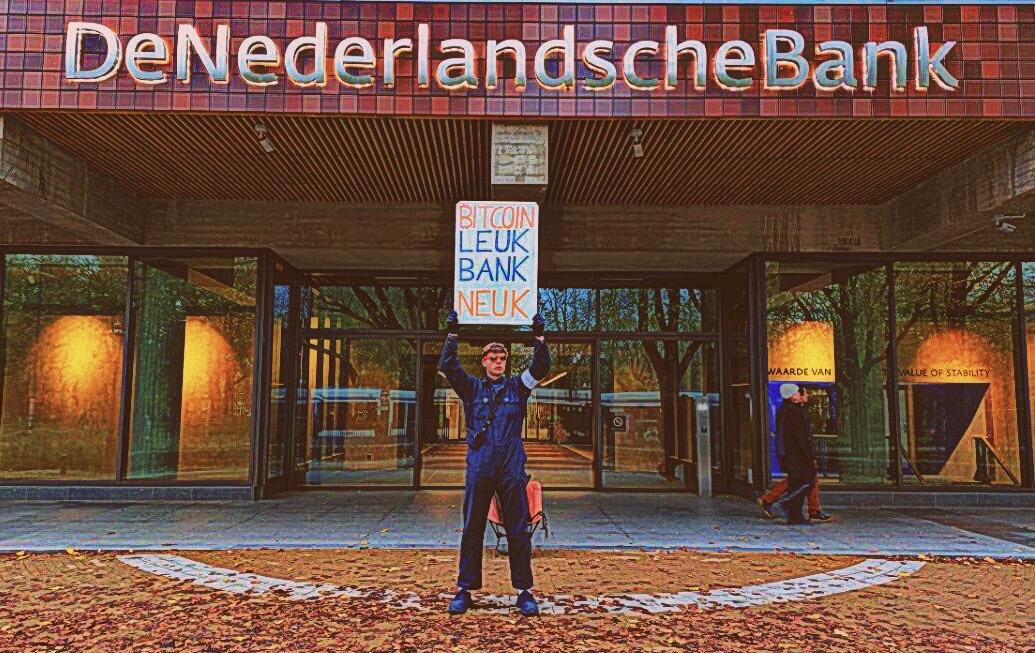
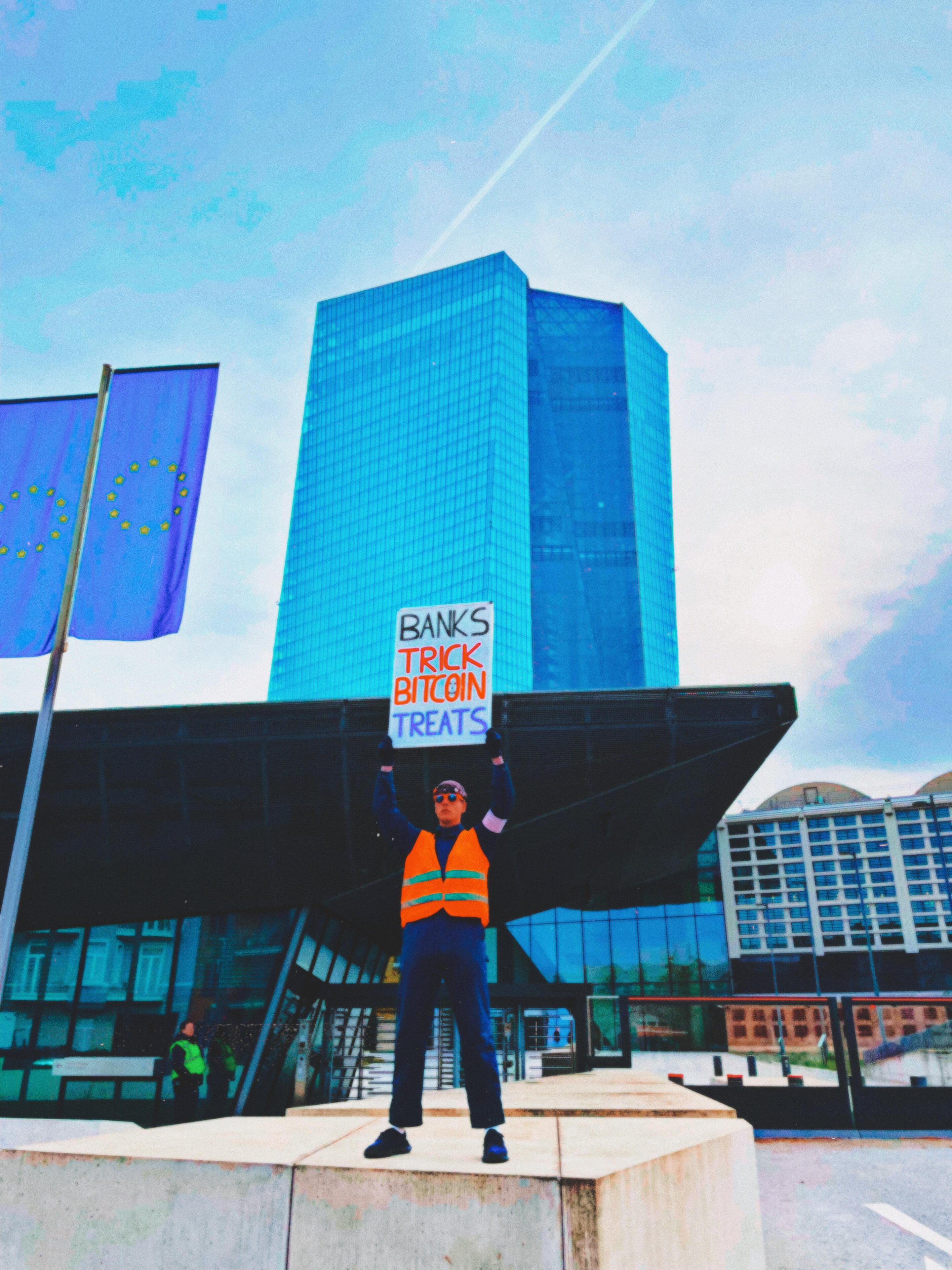
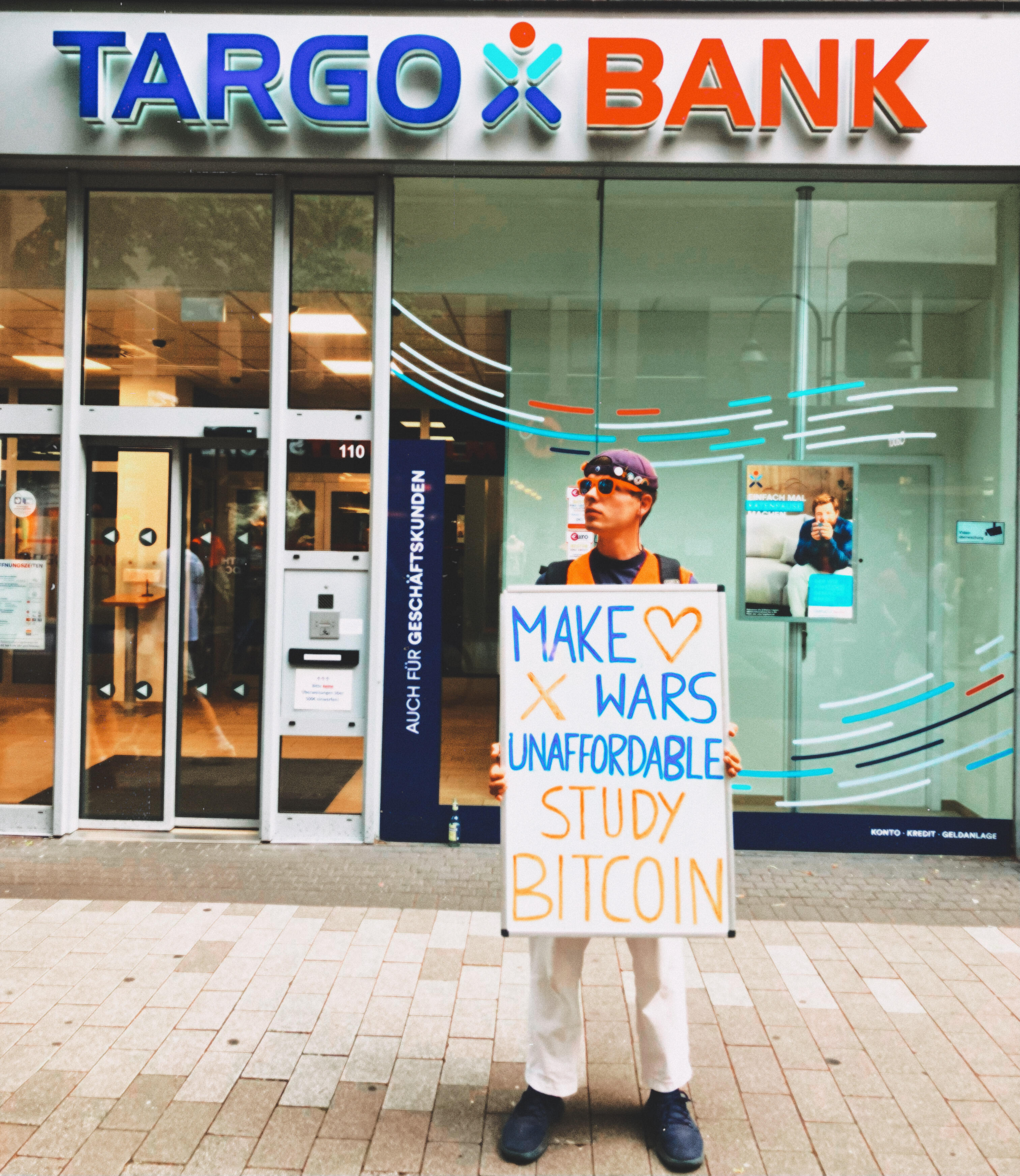
Every August since 2024, from the 1st to the 21st, Oskar Hassel, a mysterious fellow I’ve met twice, has stood outside the European Central Bank with placards.
Someone somewhere stamps ₿ on the banknotes. Someone else projects “Study Bitcoin” onto the Czech National Bank at night.
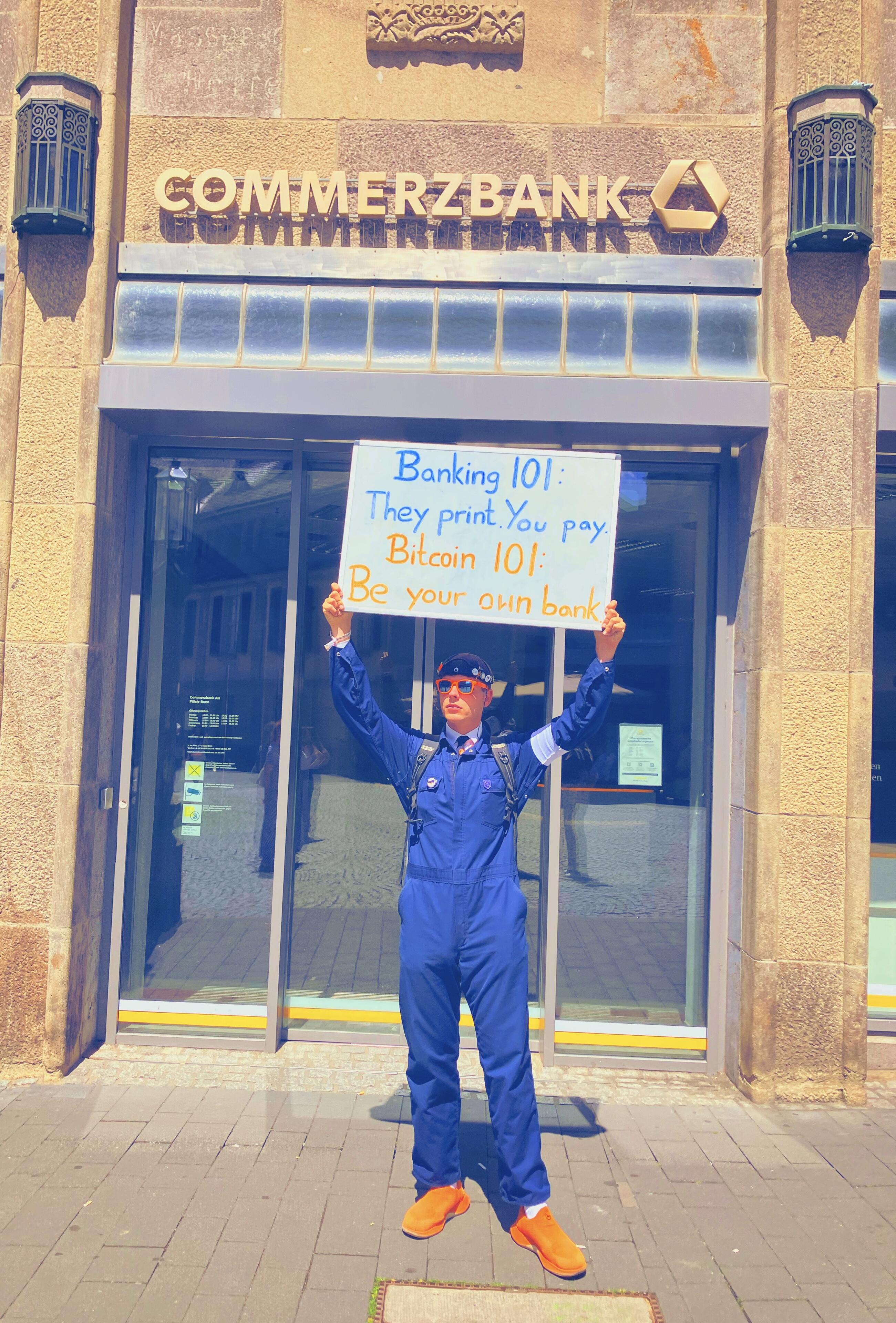
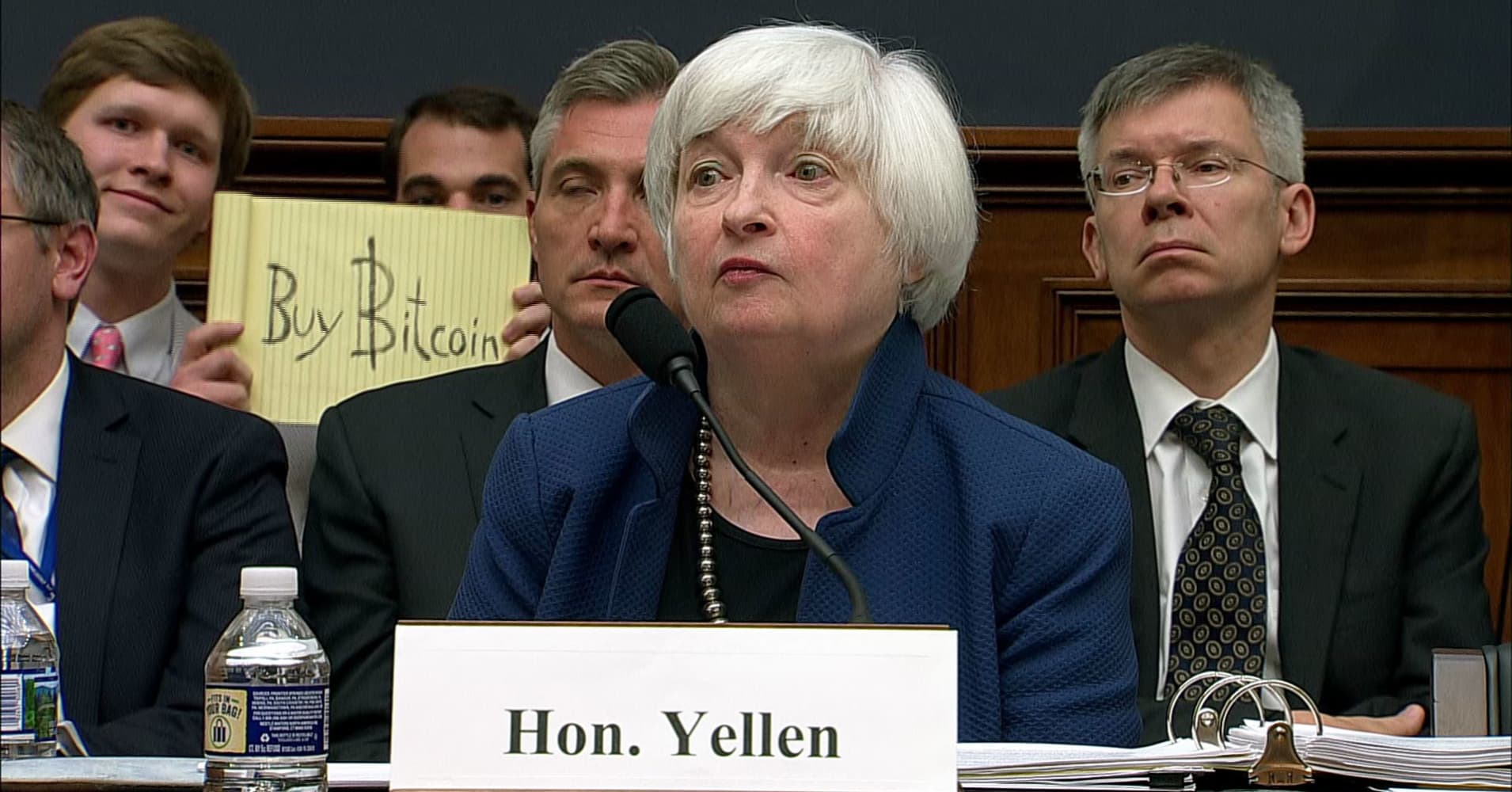 Christian Langalis behind Janet Yellen, U.S. House Financial Services Committee, 2017. Still: C-SPAN, via the House committee.
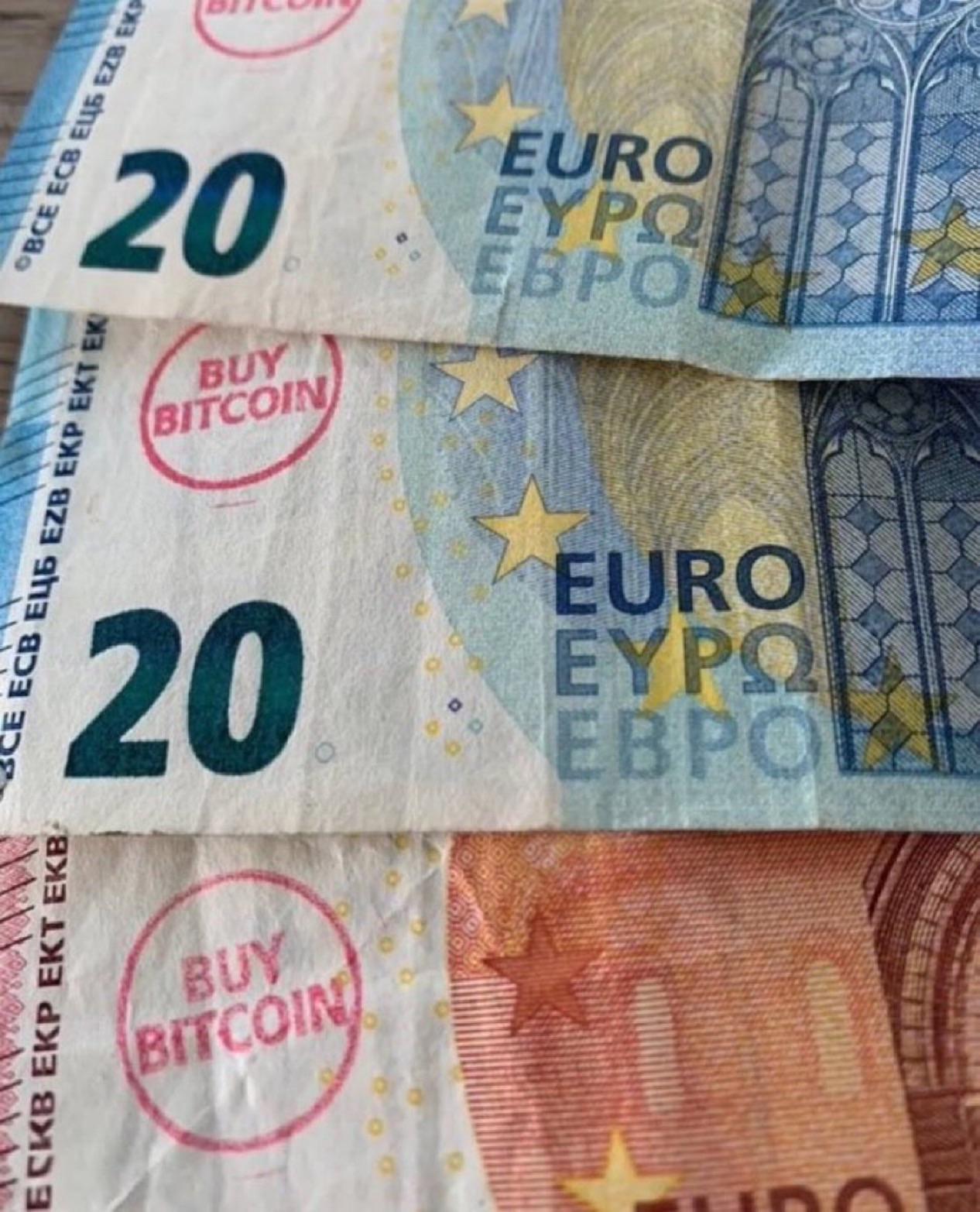 “Buy Bitcoin” stamped on euro banknotes. Photographer unknown.
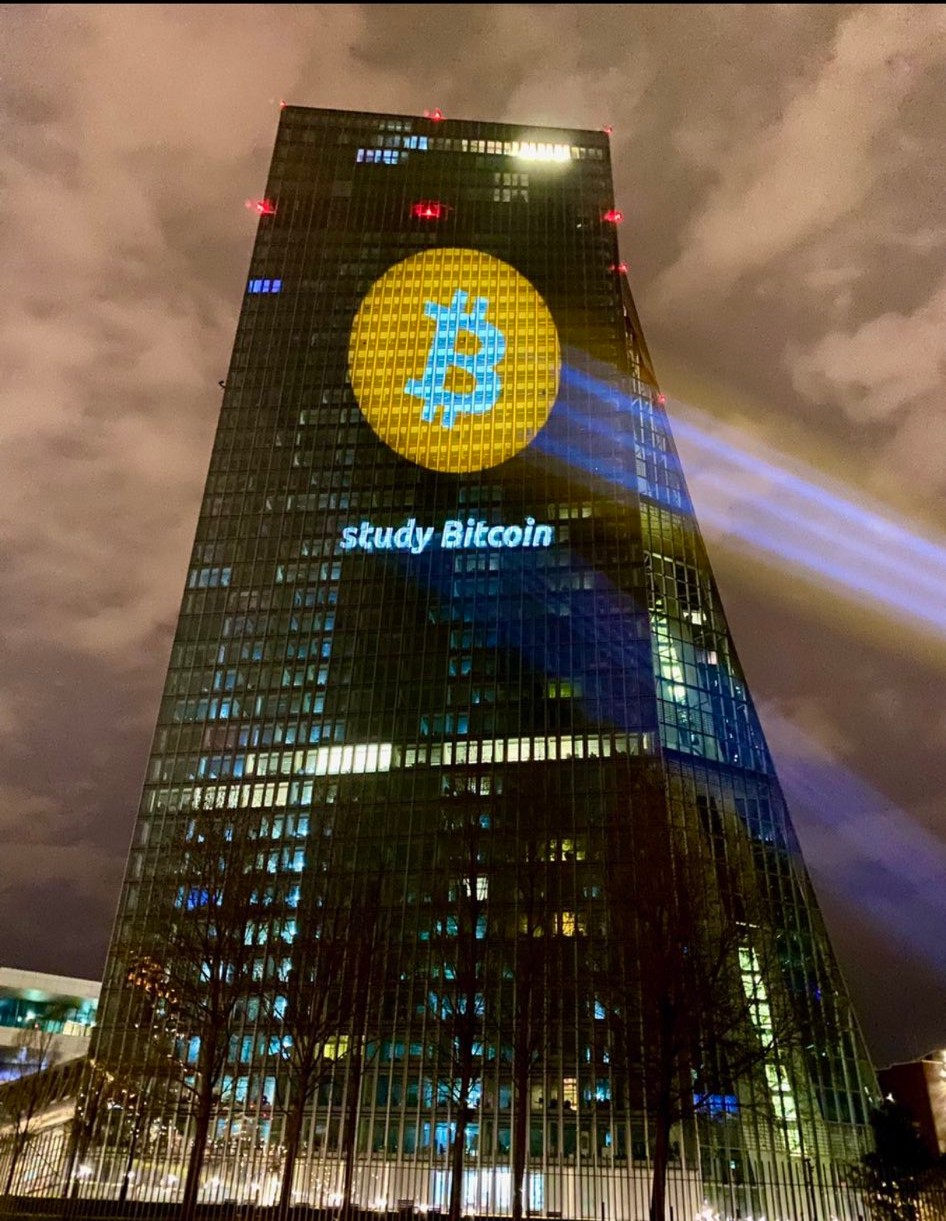 “Study Bitcoin” projected in Frankfurt, March 2023. Source: Bitman.
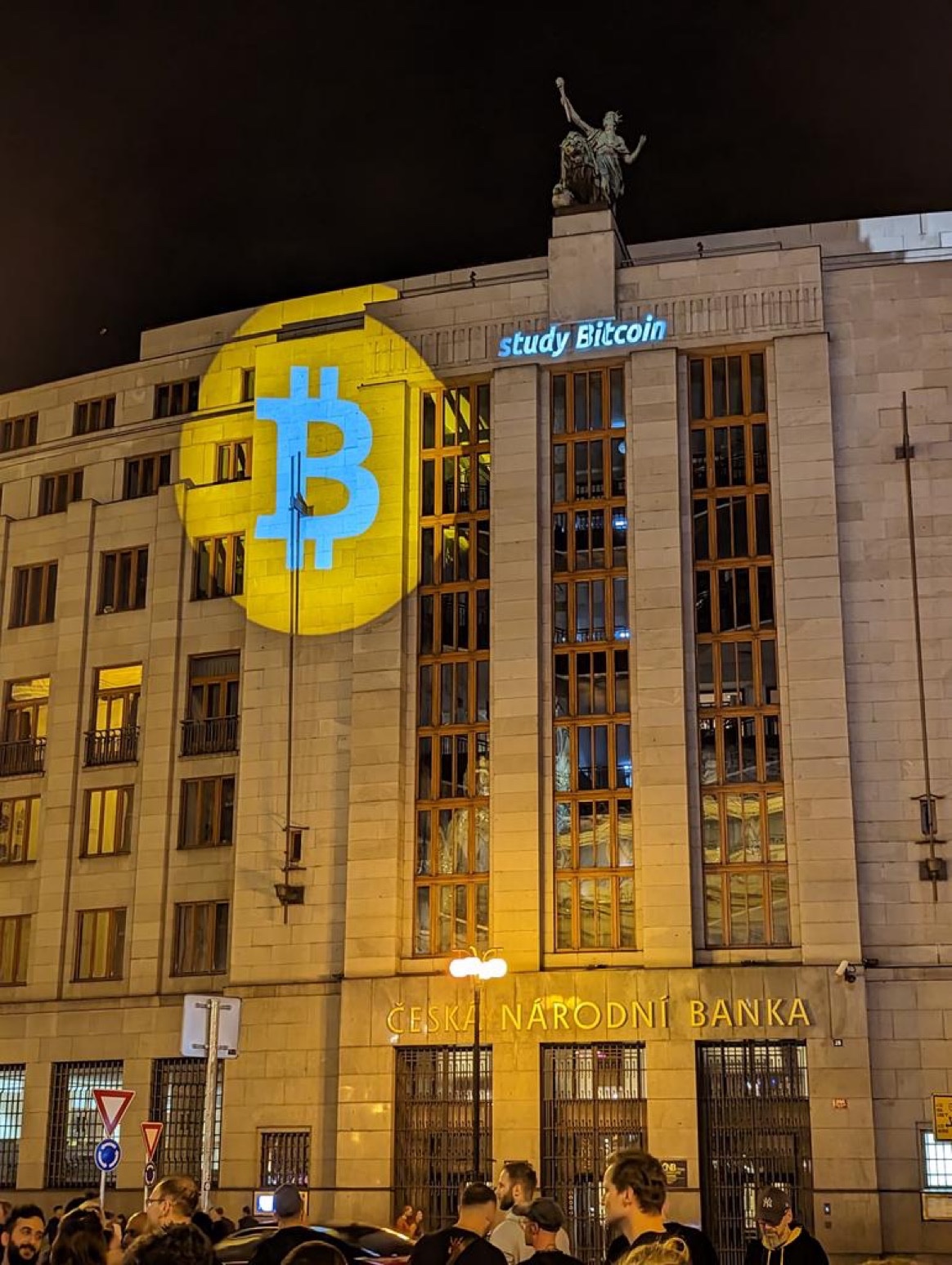 The same message on the Czech National Bank, Prague. Photographer unknown.
Sometimes it shows up in the middle of someone else’s protest. At Kenya’s 2024 Gen-Z protests, Felix, founder of the Nairobi Bitcoin community The Core (not Bitcoin Core), held up a handwritten sign: “Vote Bitcoin.”
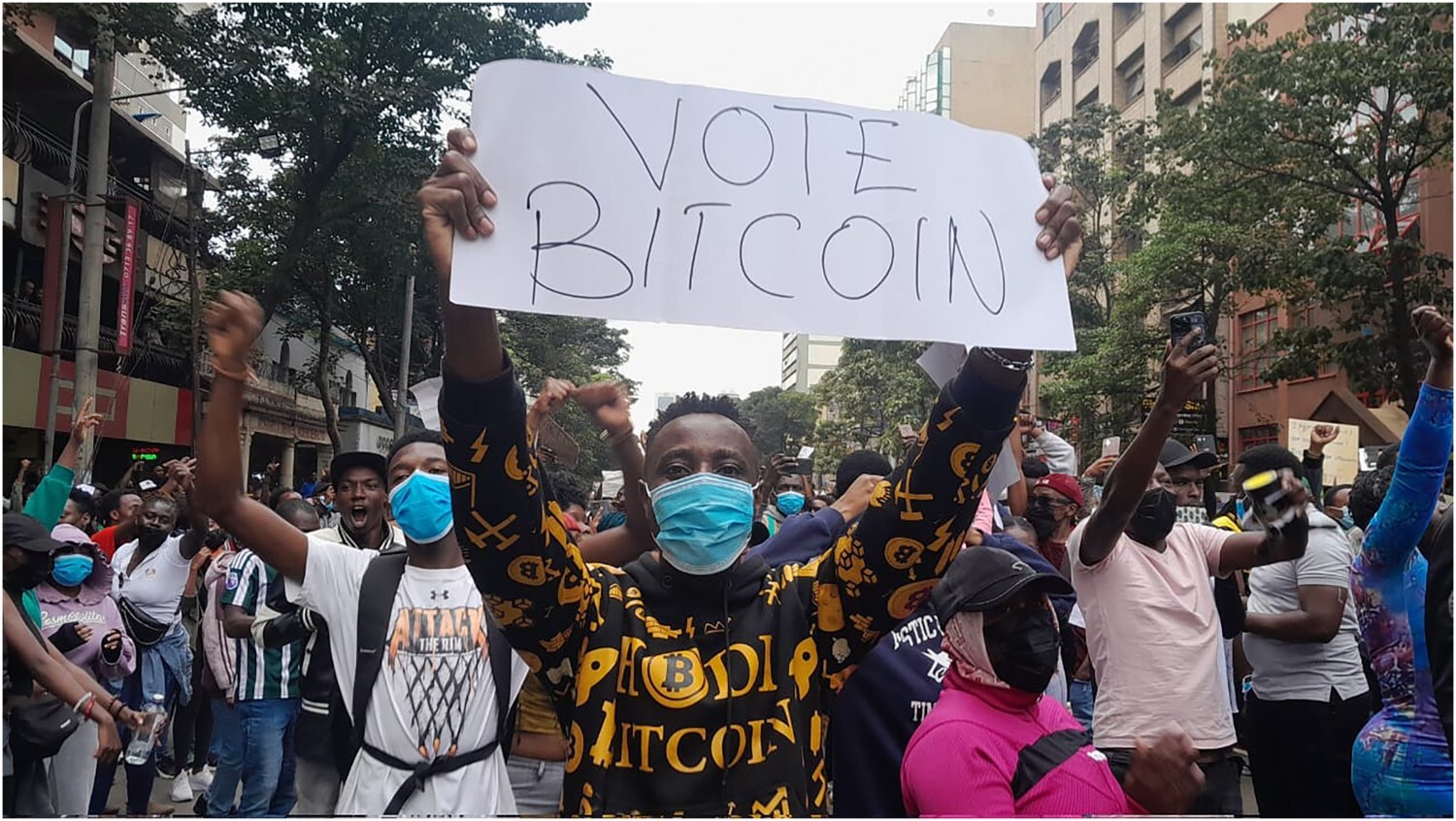 Felix with his “Vote Bitcoin” sign at Kenya’s Gen-Z protests, Nairobi, 2024. Photo: Felix, via Ethnos.
And some of it is just the internet being the internet. In 2021 thousands of Bitcoiners, a US senator among them, gave themselves laser eyes until the price hit $100,000. It took until December 2024.
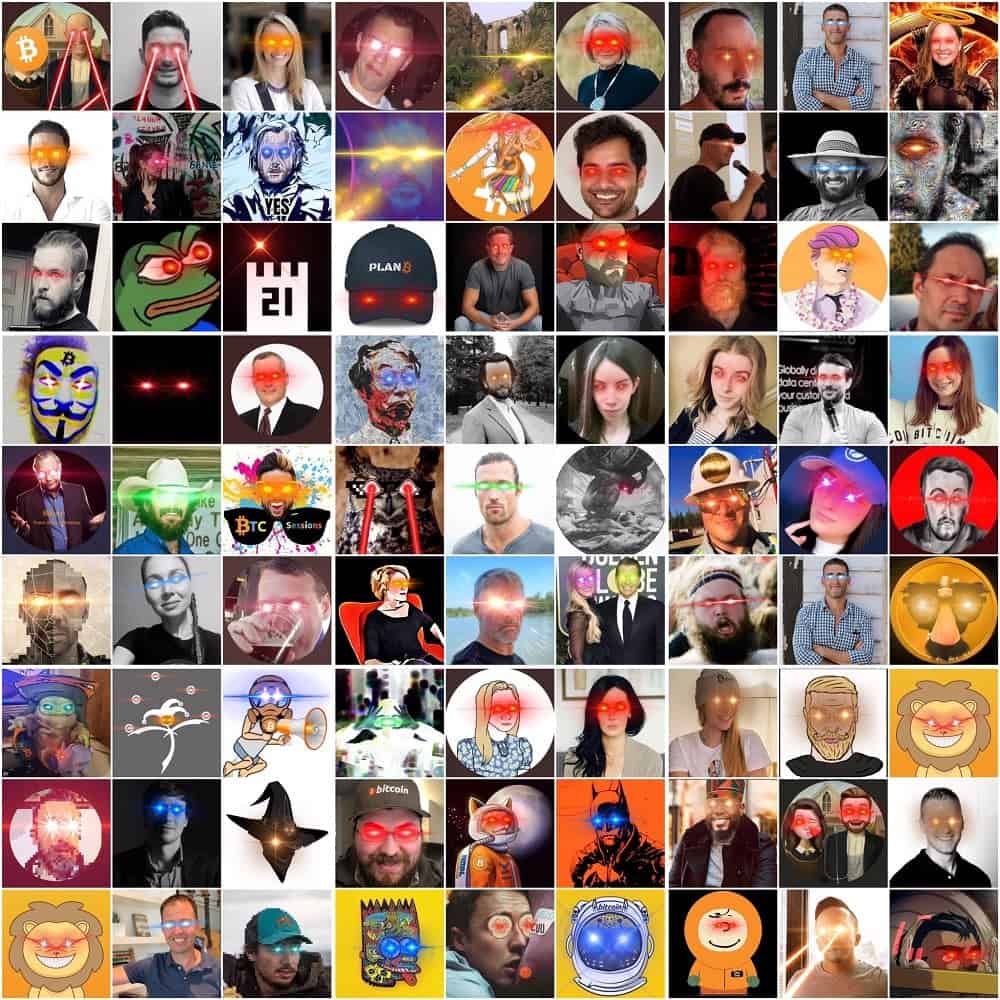 Laser eyes. The meme began with #LaserRayUntil100K in 2021.
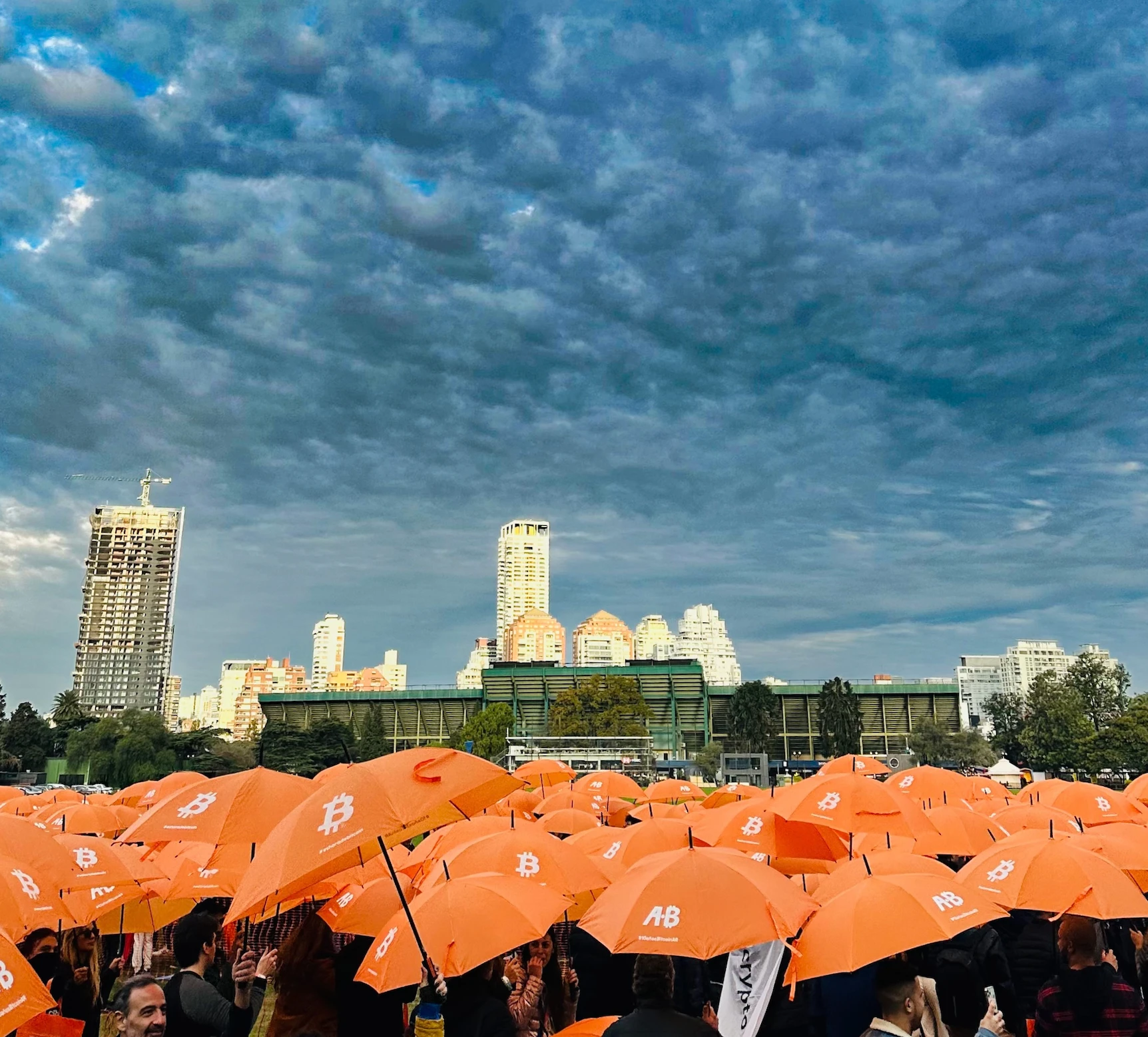 Hundreds of orange umbrellas form a giant ₿ on a polo field, Buenos Aires, 2023. Source: Bitcoin Argentina.
And some of it is written into Bitcoin itself, like the genesis block. Then, on 11 May 2020, during the pandemic money printing, whoever mined the last block before the halving (629,999) left also a reply: “NYTimes 09/Apr/2020 With $2.3T Injection, Fed’s Plan Far Exceeds 2008 Rescue.” [23] All messages on the blockchain stay there as long as Bitcoin does.
Ironically, bitcoiners also use the chain to argue with each other. In the long fight over spam filters, both sides wrote their case straight into transactions. One from January 2024 reads, simply, “Consensus is King.” [112] Another, from August 2024, ends: “Decentralisation needs activist users, who make their own decisions.” [113] Hacker graffiti nobody can paint over.
Others voted with their nodes: in 2025 thousands of node operators switched from Bitcoin Core to Bitcoin Knots, which kept the stricter filters, taking its share from about 4% to over 20% of public nodes. [56]
Some of it is institutional and well funded. Block Inc. ran a month-long campaign in Washington, D.C. in late 2025, with free coffee at Compass Coffee for anyone paying in bitcoin [12]. The ask was a de minimis tax exemption, so that buying a coffee with bitcoin would not count as a taxable sale. In September 2026, the exemption advanced, and now covers transaction fees of up to ten dollars. Yay? A few weeks later, Jack Mallers’ company Twenty One filled a Times Square screen with one line: “No man should work for what another man can print.” [14]
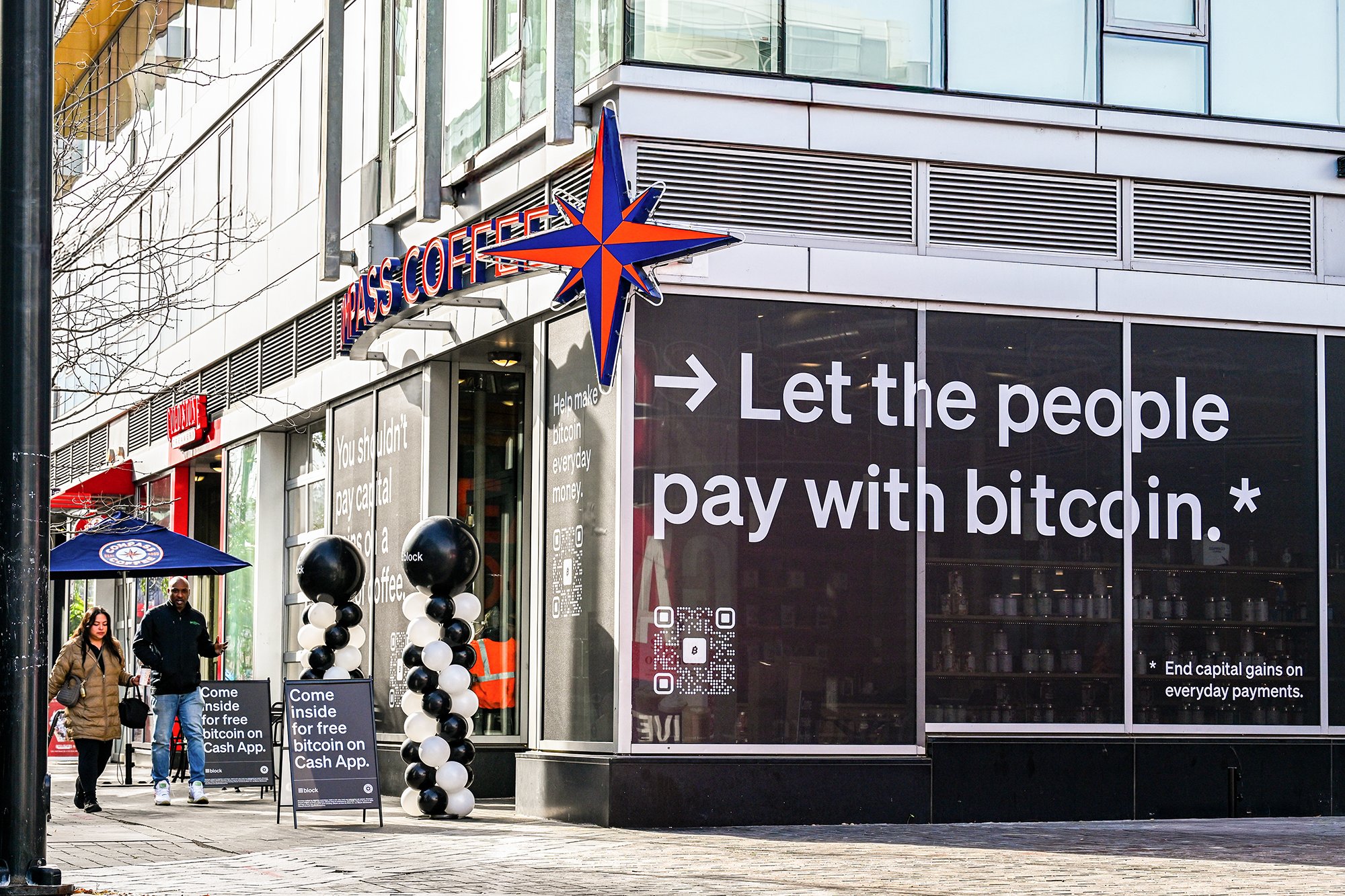 Compass Coffee, Washington D.C., 2025. Source: Compass Coffee.
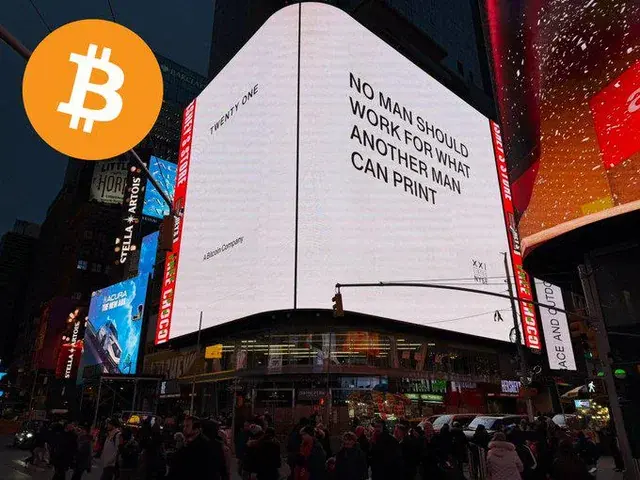 Twenty One’s billboard in Times Square, December 2025. Source: TechStory.
And some of it is municipal. Kranj in Slovenia put a three-tonne Bitcoin sculpture in a roundabout in 2018 after residents voted for it [34]. Lugano unveiled a statue of Satoshi Nakamoto in 2024, part of its plan to become Europe’s Bitcoin hub [114].
The Lugano statue has had a rough life. In August 2025 a group of young people threw it into the lake. Divers fished it out, and the artist, Valentina Picozzi [115], repaired the cracks in gold, in the Japanese kintsugi way. It was reinstalled in October. In April 2026 someone smashed it again. Meanwhile her copies have spread: El Zonte, Tokyo, Hanoi, Hong Kong, the New York Stock Exchange, and Vienna just last week.
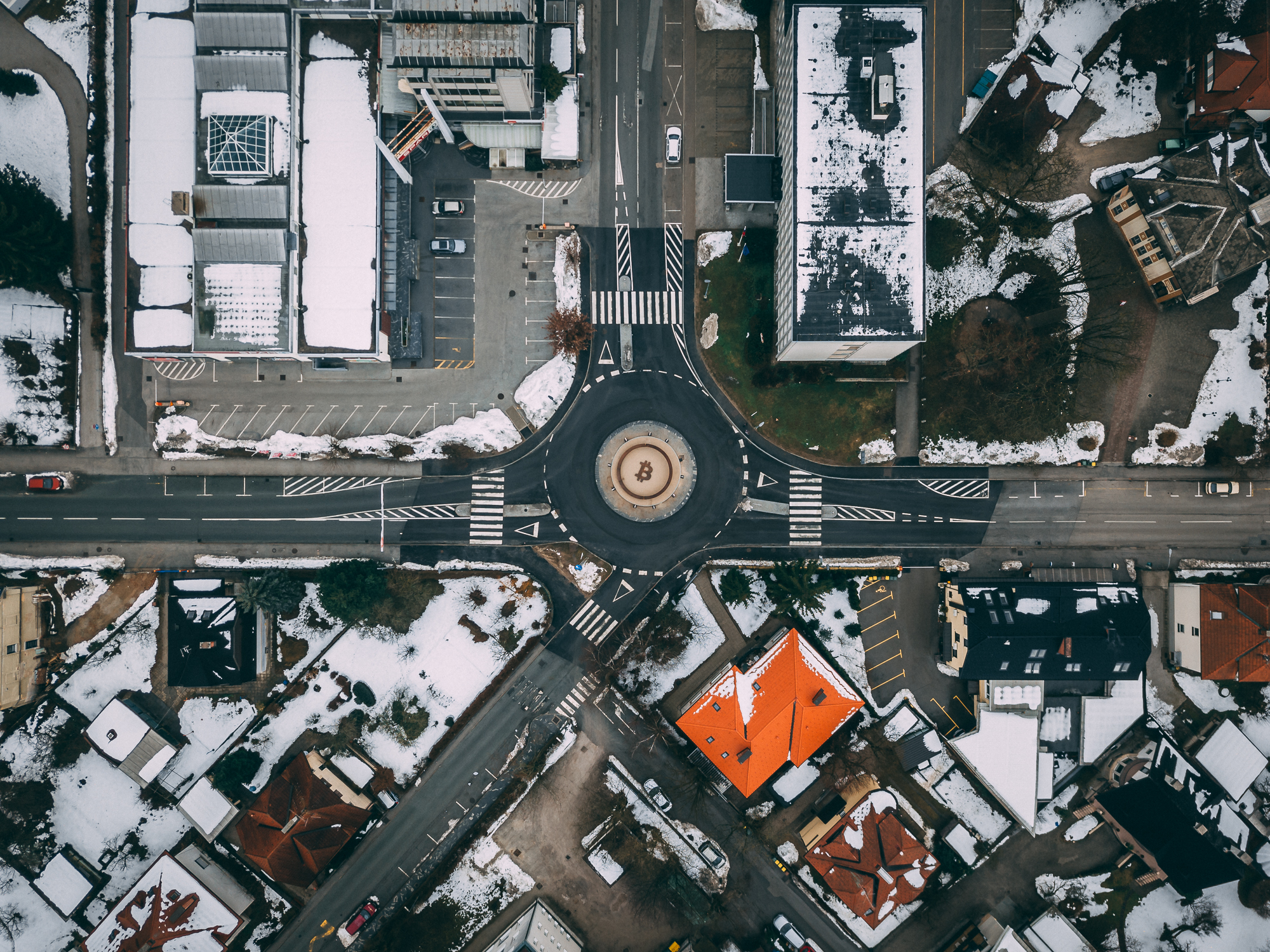 Kranj’s Bitcoin roundabout. Photo: Andrej Trček.
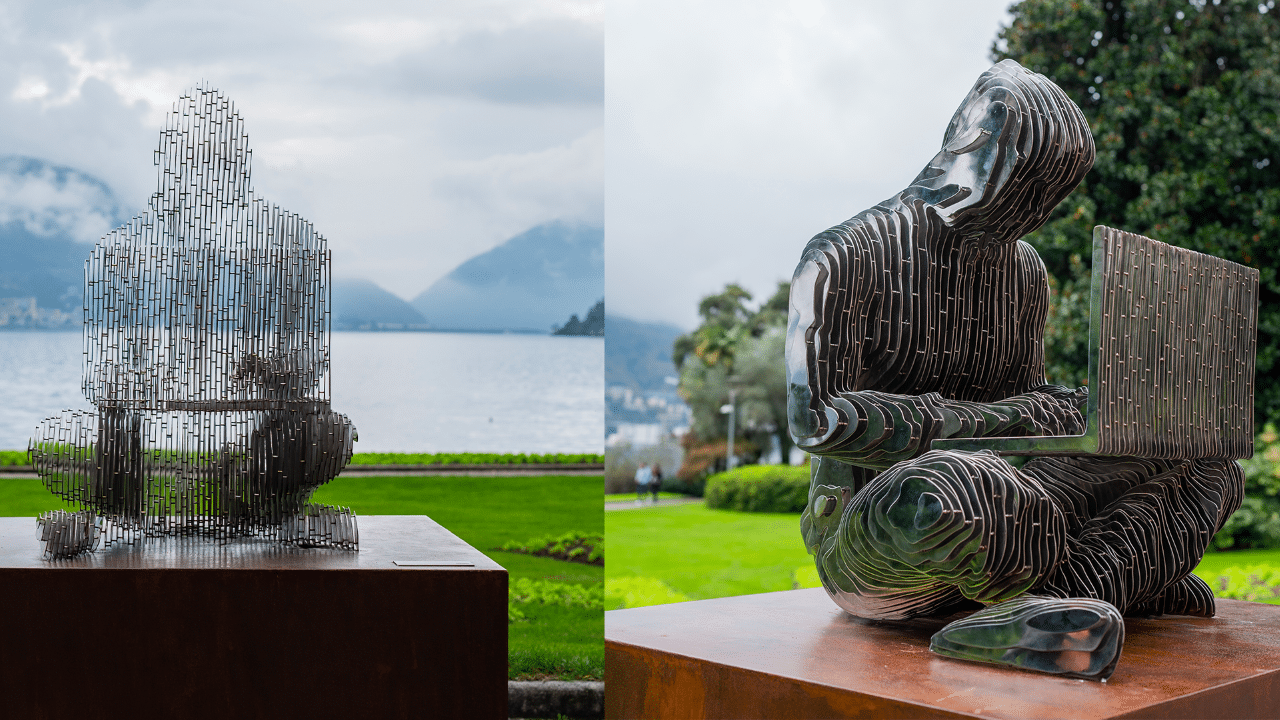 Satoshi in Lugano. Artist: Valentina Picozzi.
The best protest is art in my opinion, because it creates such a strong wave of symbolism, meaning, and emotion. Sharp never gave it a category of its own, but the organiser Nadine Bloch, whom Beer cites, sorts cultural resistance into twelve kinds, from murals and stickers to puppets and sculpture [3].
For example, in 1989 students in Tiananmen Square raised a statue, the Goddess of Democracy, until soldiers destroyed it on 4 June [116]. And Banksy’s art is my all time favourite, be it in Ukraine or Israel. His message is very touching and infuriating even. A statue or a mural says what a petition cannot. For better or for worse.
Bitcoiners use art the same way. Cryptograffiti, a pseudonymous artist, bolted twelve wooden seed words onto the US–Mexico border wall, because a seed phrase you remember crosses any border [27]. Shrewd.
He also made prints in which, through an augmented-reality app, a dollar bill burns and a bitcoin note takes its place [20], put billboards in all twelve Federal Reserve cities [9], and sent Nashville’s Bitcoin Park a 25-foot bitcoin for its wall [28].
Phneep turns old war propaganda into Bitcoin posters [7]. Matthias Dörfelt generated 64 banknotes from Bitcoin’s blockchain [24], and FractalEncrypt builds intricate sculptures and curates Bitcoin art at BTC Prague [29]. There is even a magazine for all of it, Timechain [25].
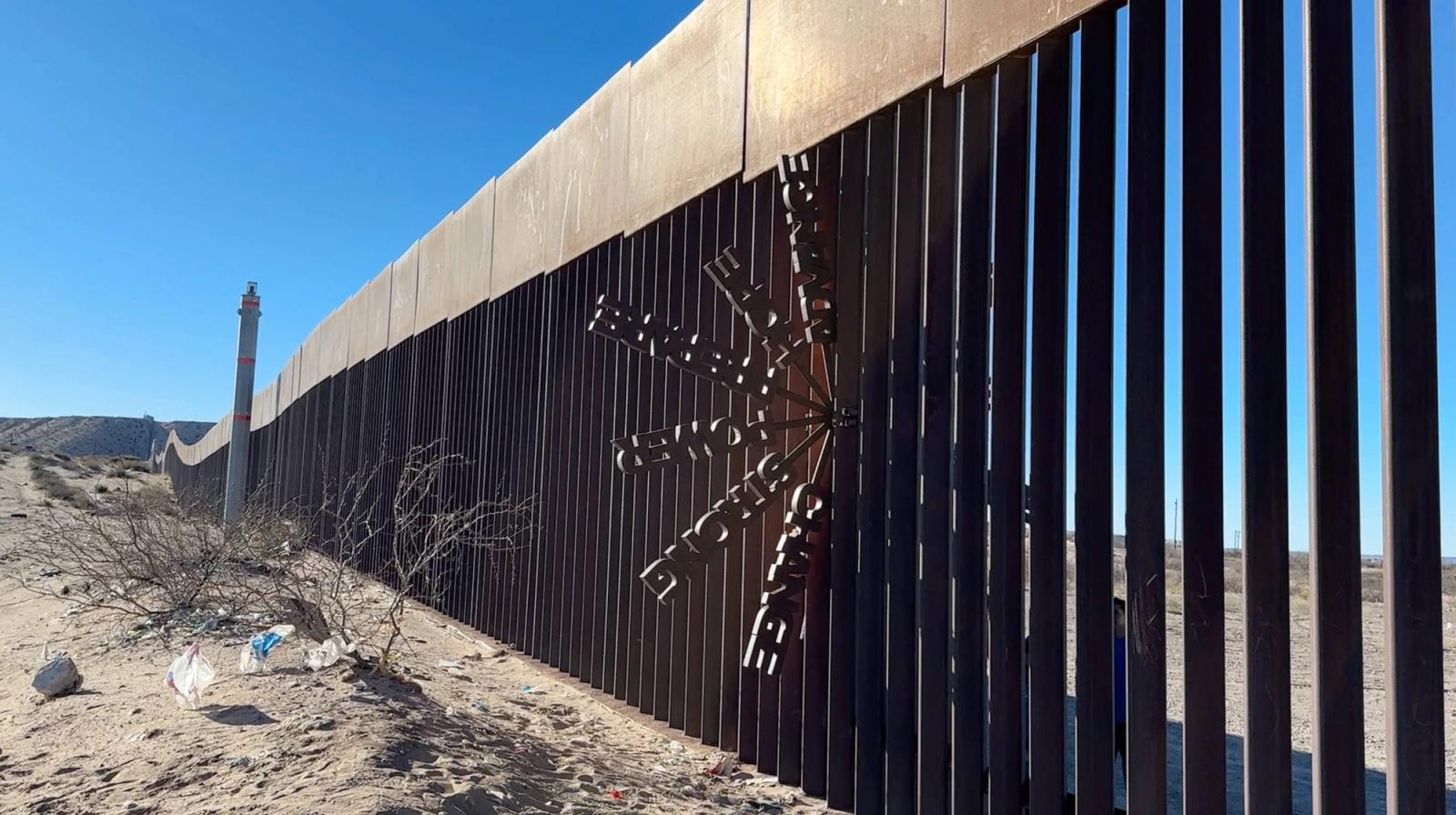 Cryptograffiti’s seed-word sculpture on the US–Mexico border wall. Source: Scarce City.
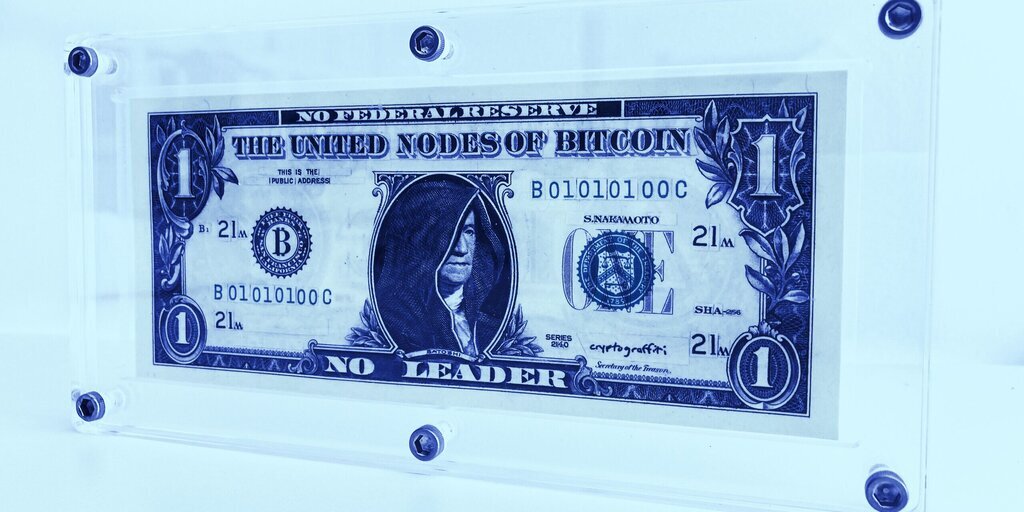 Cryptograffiti’s prints, where the dollar burns in augmented reality, 2020. Source: Decrypt.
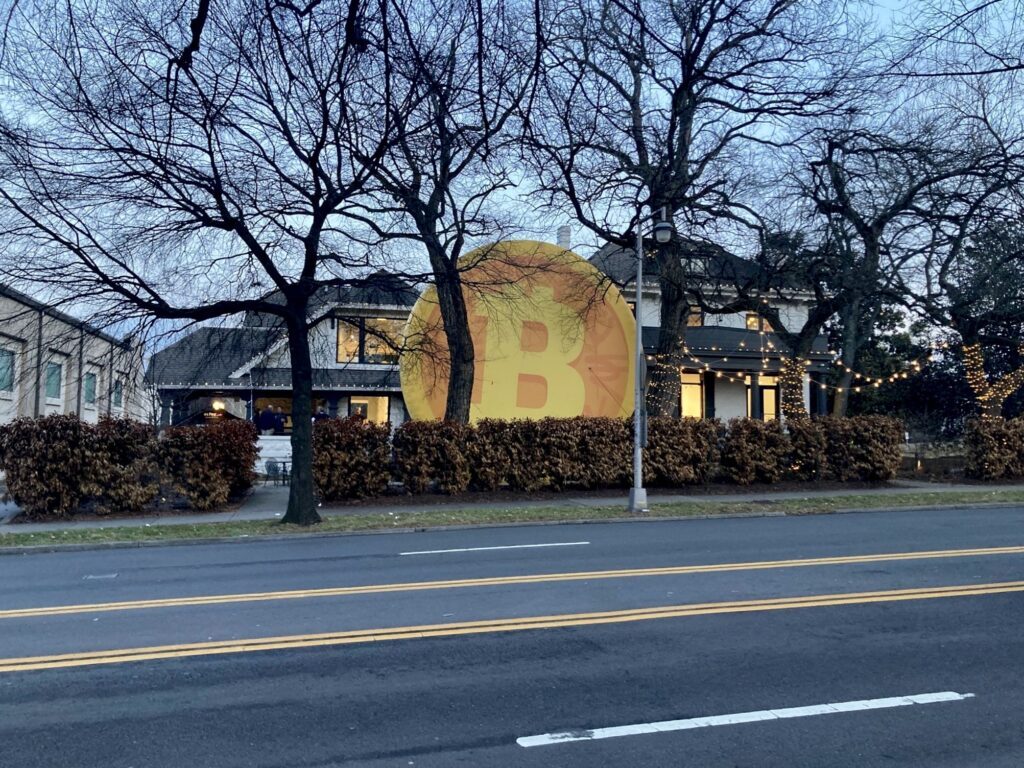 A 25-foot bitcoin by Cryptograffiti on Bitcoin Park, Nashville. Source: Love is Bitcoin.
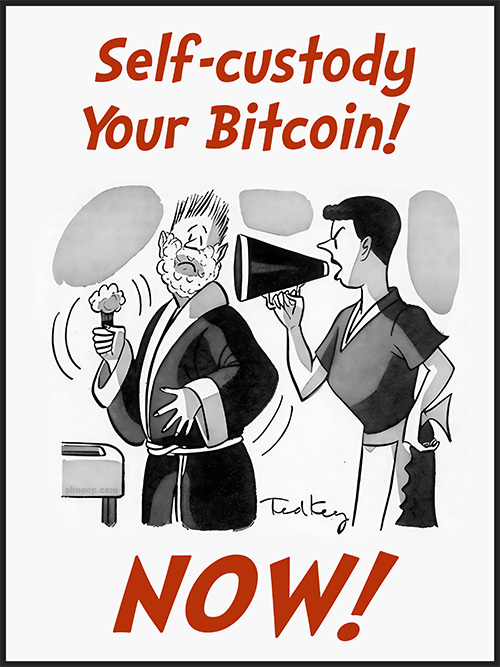 “Self-custody your Bitcoin NOW!”, one of Phneep’s posters. Source: Phneep.
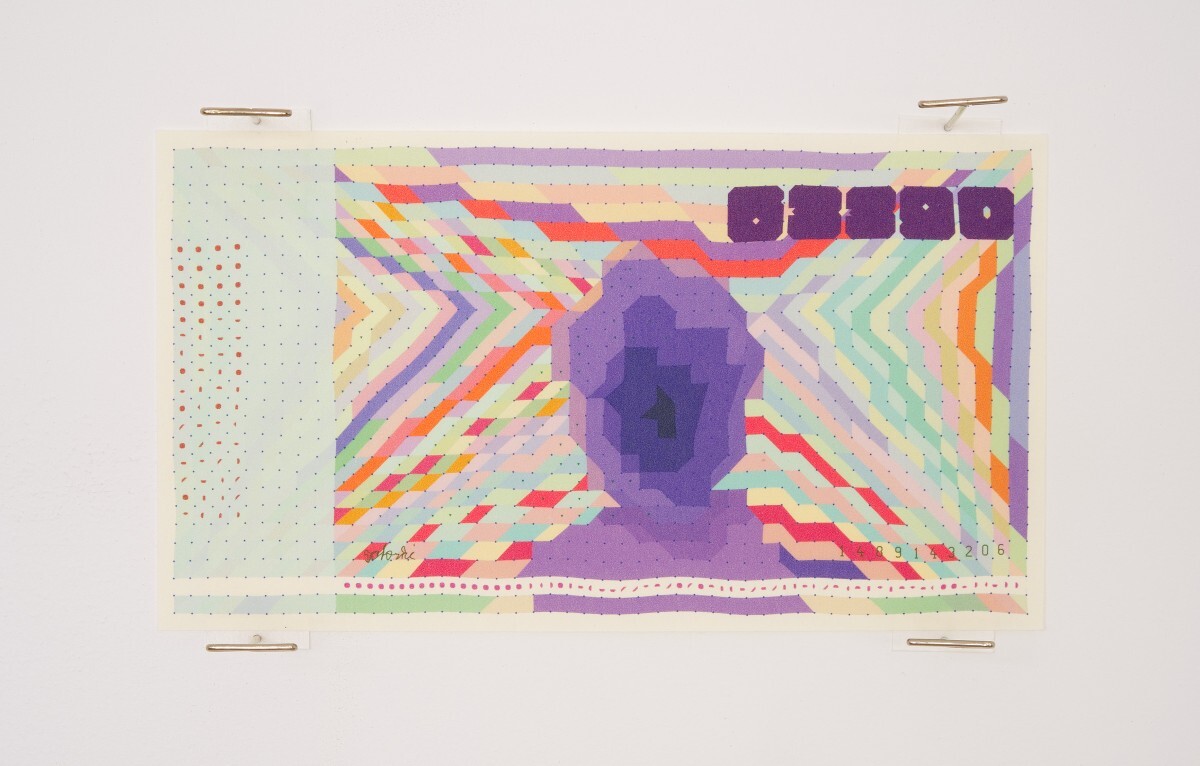 Block Bills, banknotes generated from the Bitcoin blockchain, 2017. Artist: Matthias Dörfelt.
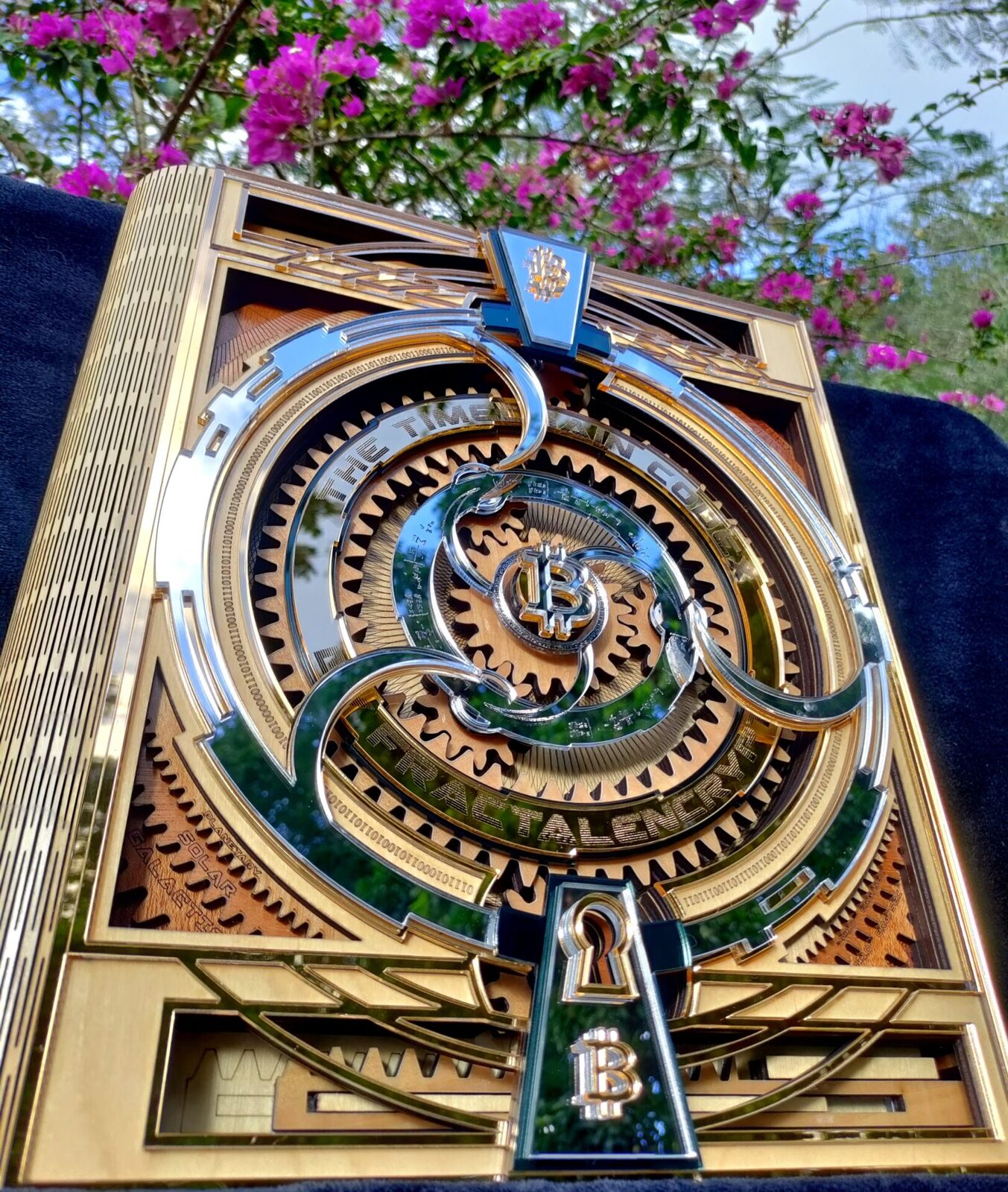 FractalEncrypt’s sculpture "The Timechain Codex". Source: BTC Prague.
“The amount might have been small, but the independence it gave them was not.”
— Roya Mahboob, on paying Afghan women in bitcoin
You refuse: noncooperation
Every 3 January, on Bitcoin’s birthday, some holders withdraw their coins from exchanges into wallets they control. It’s called Proof of Keys. Beer would call it a withdrawal of deposits. The good ol’ bank-run threat, made annual and polite.
 Proof of Keys, 3 January. Source: Proof of Keys.
It’s a small, little-known ritual, but it keeps a culture alive. Refusal under repression is different though: there, Bitcoin shows what it is really for!
In Herat, Afghanistan, Roya Mahboob began paying the women at her software company in bitcoin back in 2013, because cash wages could be taken by their male relatives.
When Nigeria’s #EndSARS protesters had their bank accounts frozen in 2020, the Feminist Coalition switched to Bitcoin. Their own accounting shows 7.2 BTC sold for 57.6 million naira [101]. They kept one transaction hash private, so as not to expose their donors.
In Russia, Navalny’s Anti-Corruption Foundation began taking Bitcoin in 2016 when banks were turned against it. By April 2026, Russian courts had opened at least 225 criminal cases against people for donating to it, though not necessarily in Bitcoin [117].
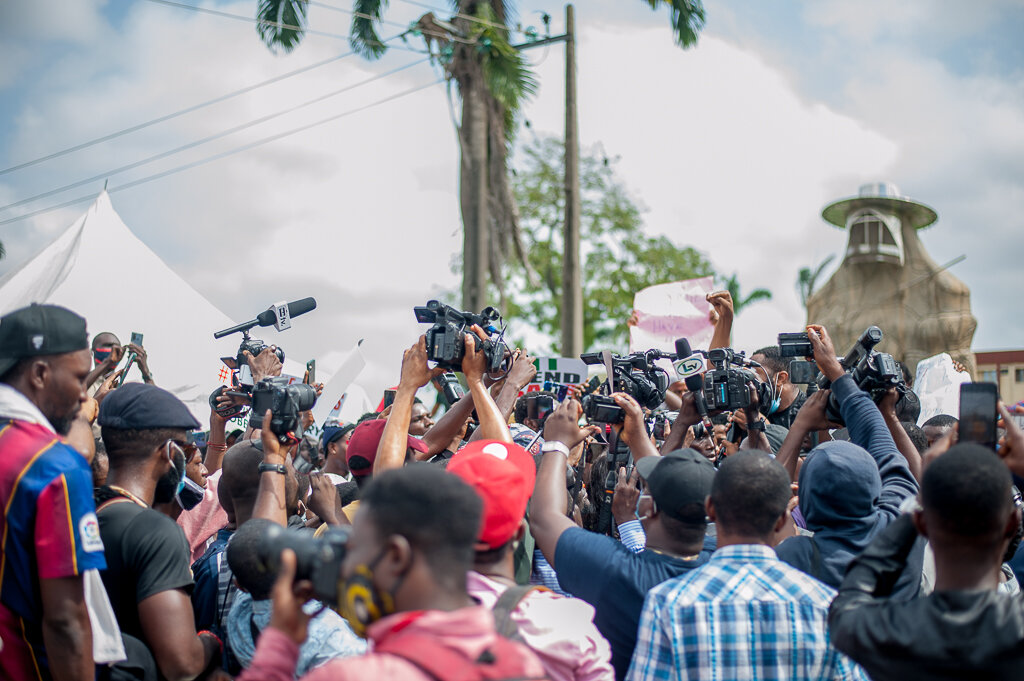 #EndSARS protesters in Lagos, 2020. Photo: Kaizenify, CC BY-SA 4.0.

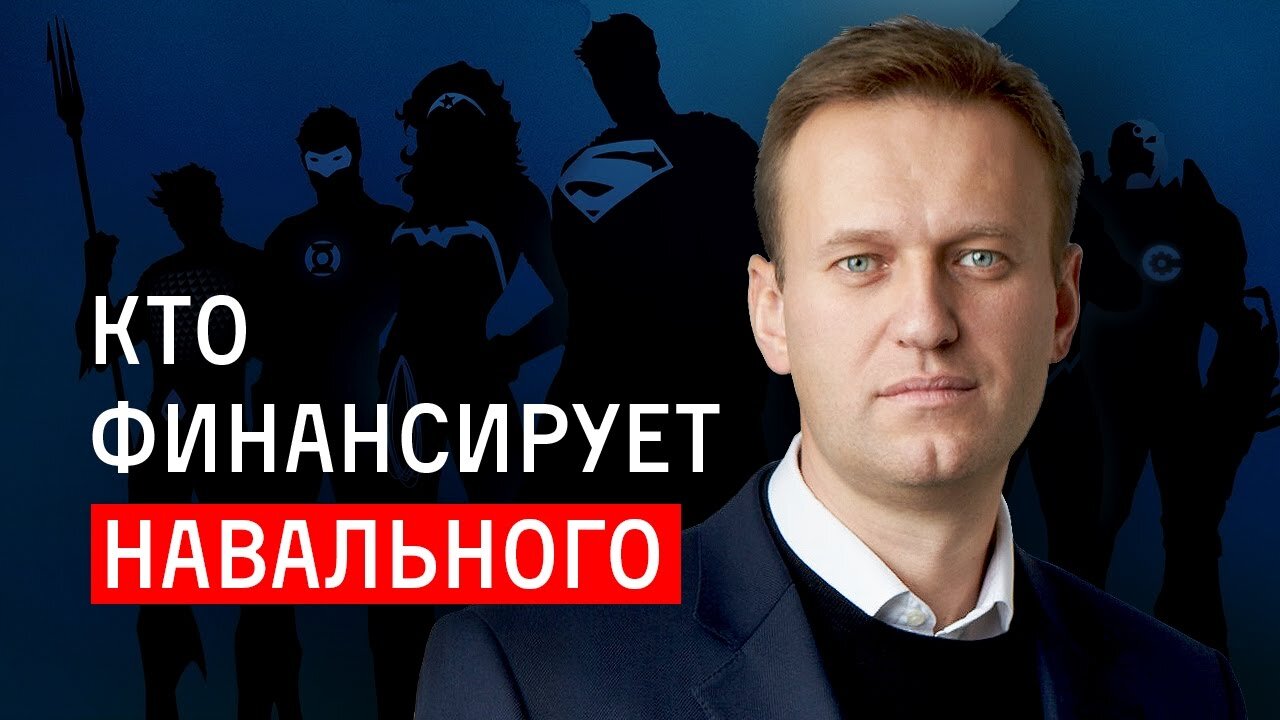 “Who funds Navalny?”, a video by his Anti-Corruption Foundation. Source: FBK.
In Iran, during the protests and the internet blackout of January 2026, Chainalysis saw Bitcoin outflows to personal wallets rise just before the shutdown, flatline while the internet was off, and pick up again when it came back [64]. We don’t know who they were, only that they moved their money somewhere safer.
And in Venezuela, during the 2024 election, opposition volunteers collected tally sheets from 80% of polling stations. They showed Edmundo González winning with 67% of the vote, while the electoral authority declared Maduro the winner [118]. According to Leopoldo López, Bitcoin helped pay the volunteers [5].
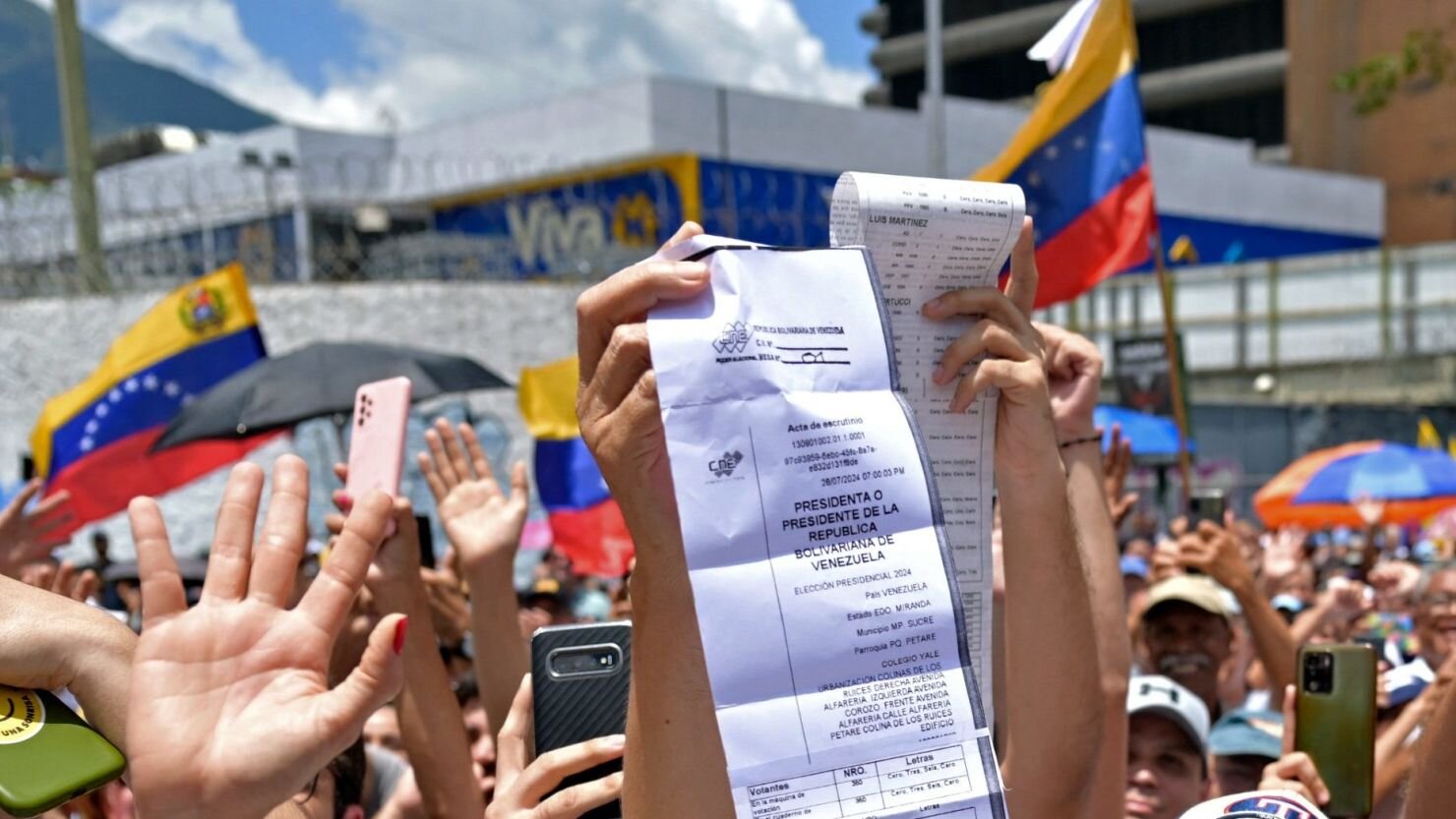 An opposition supporter holds up a tally sheet, Venezuela, 2024. Source: CNN en Español, Getty Images.
You build: intervention
Most of the energy is here. Cypherpunks build; they don’t ask for permission.
Take communication. BitChat, for example, passes messages from phone to phone over Bluetooth, no internet needed. Downloads spiked during shutdowns in Nepal [66], Uganda [119] and India [120], until India had Apple pull it in October 2026 [121].
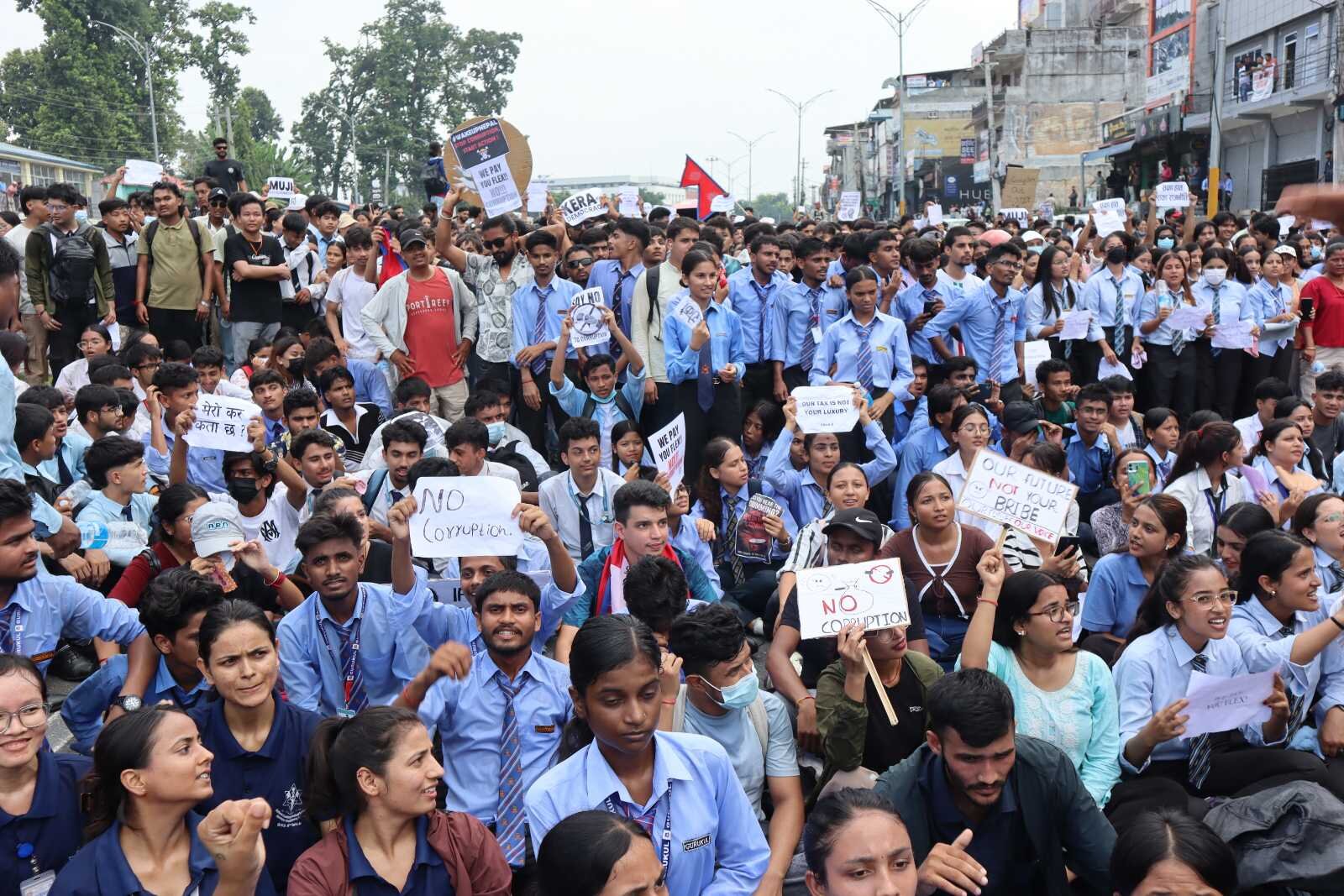 Nepal’s Gen-Z protests, September 2025. Source: Nepal News.
In Uganda, the opposition leader and former pop star Bobi Wine asked his supporters: “Have you downloaded Bitchat yet? If not, you have a small window to do so.” [69]. Beer calls this distributing alternative apps (302).
Bitcoin circular economies fascinate me; they deserve an anthropology of their own. In Bitcoin Beach in El Salvador, Bitcoin Ekasi in a South African township and Afribit in Kibera, Nairobi, merchants, waste collectors and teachers are paid in bitcoin and spend it locally. Still, many stay small and depend on local law and on fiat money.
In Guatemala’s 2023 election, SimpleProof anchored copies of the tally sheets to the Bitcoin blockchain, so any later change would show.
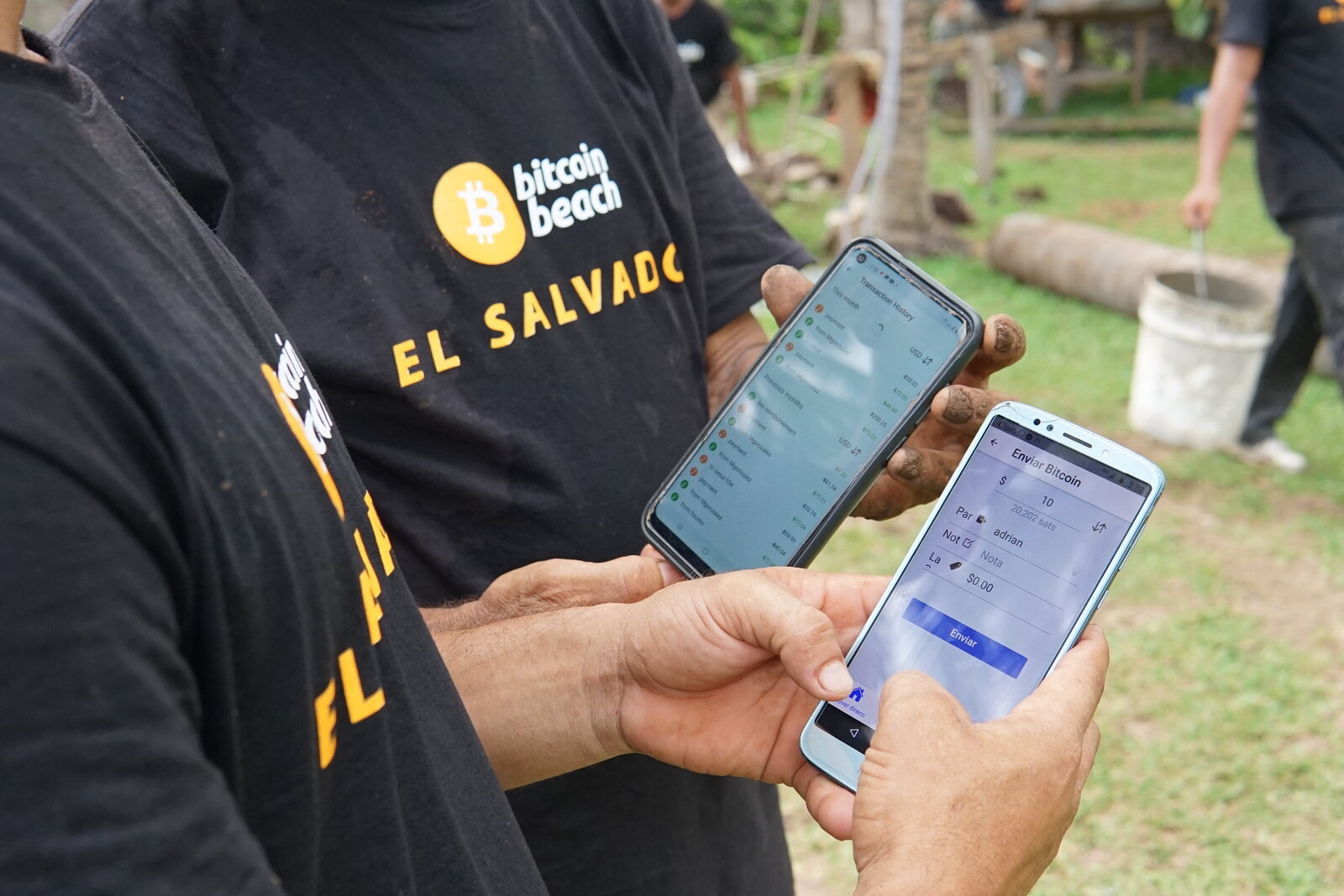 Paying in sats at Bitcoin Beach, El Zonte. Source: Bitcoin Beach.
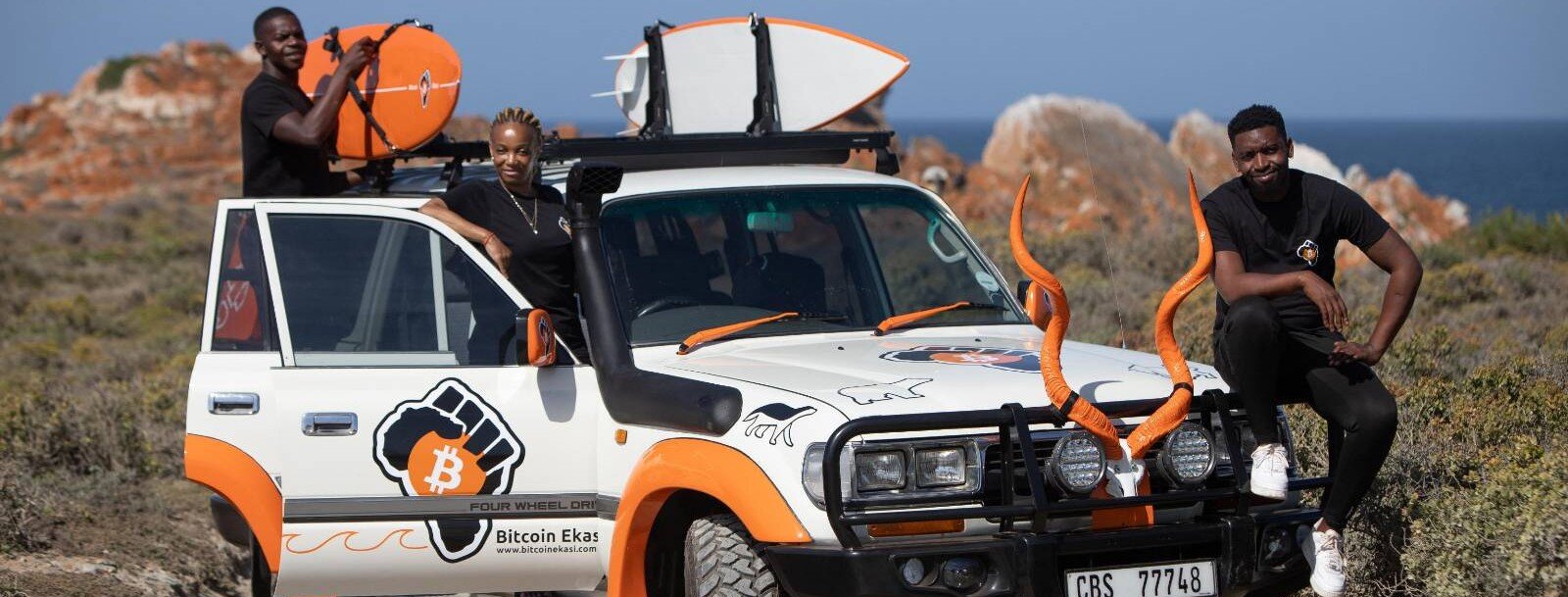 The Bitcoin Ekasi team, Mossel Bay. Source: Bitcoin Ekasi.
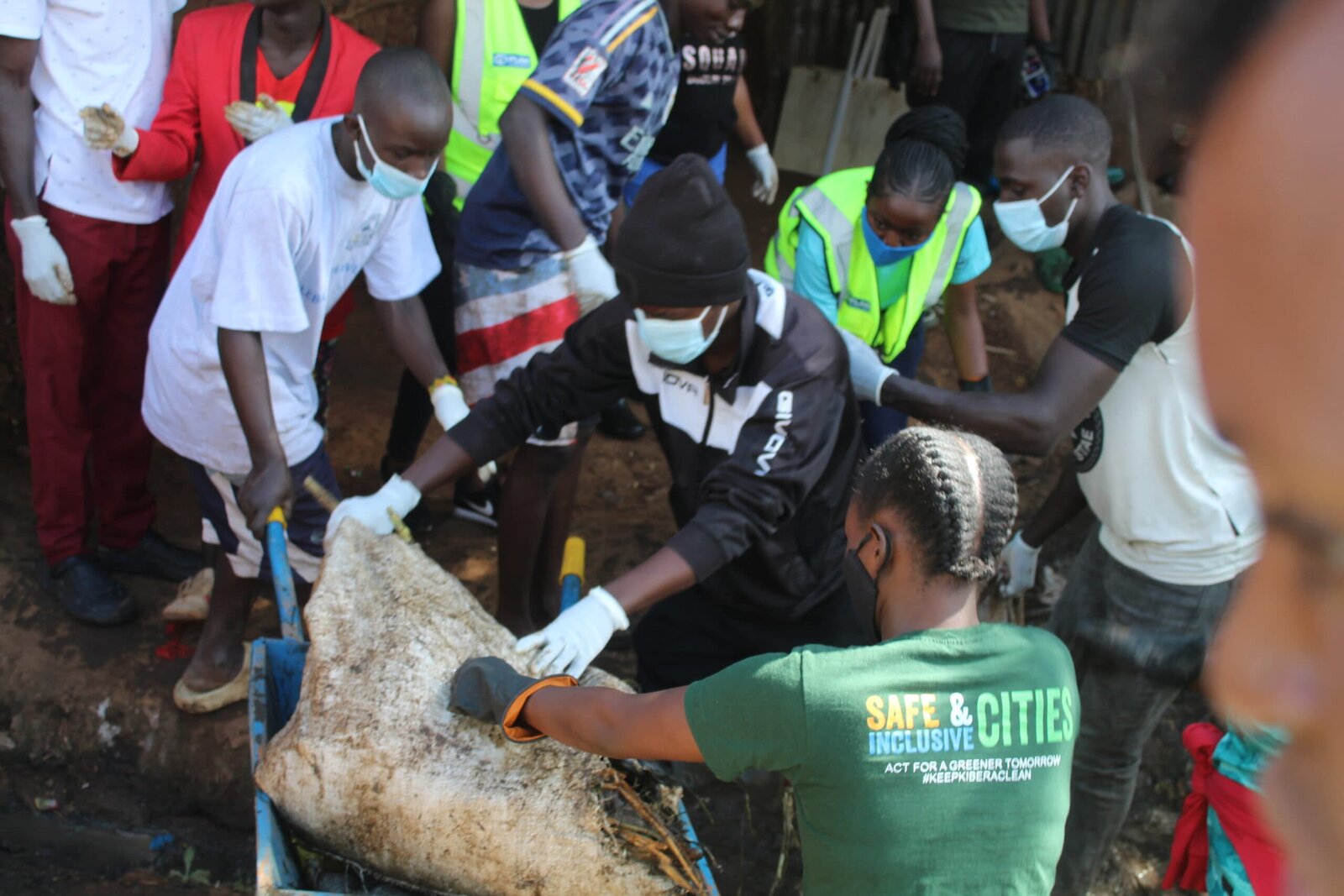 A community clean-up paid in bitcoin, Kibera. Source: Afribit Africa.
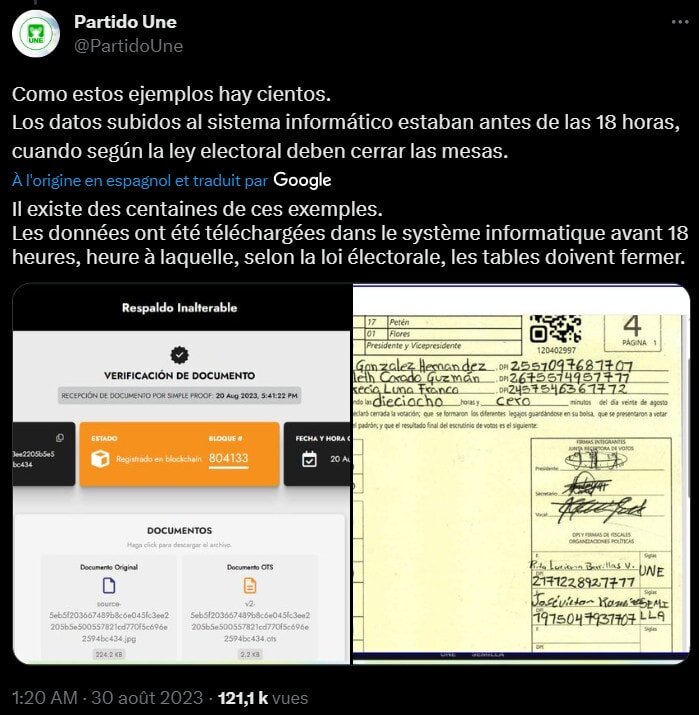 A SimpleProof timestamp next to a Guatemalan tally sheet, 2023. Source: Journal du Coin.
In Ukraine, Helping to Leave evacuates civilians from occupied areas, partly funded in bitcoin; “fifty euros of fuel gets eight people from Kupyansk to Kharkiv.” [122]
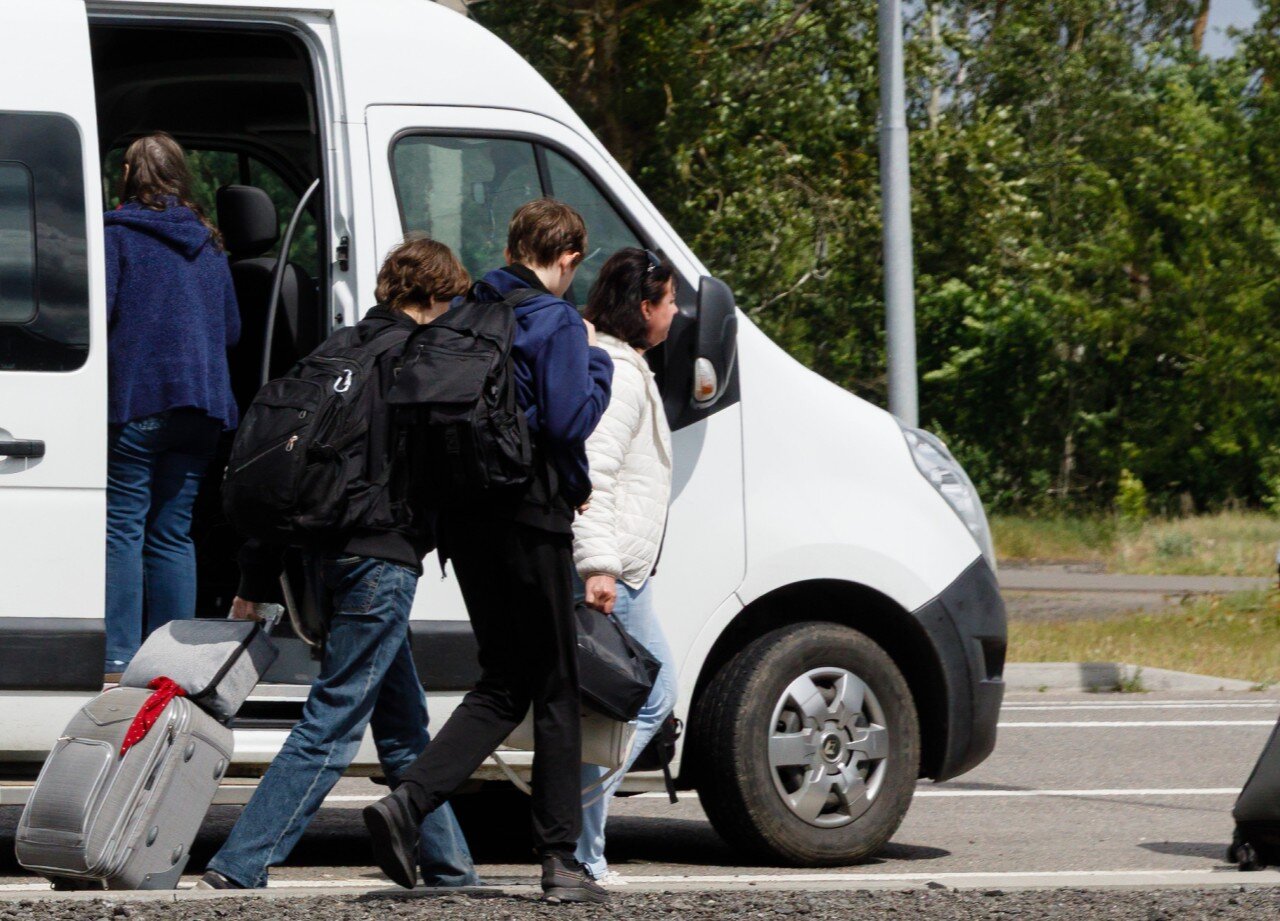 Civilians boarding an evacuation van. Source: Helping to Leave.
Then there is economic activism. Some call Bitcoin digital gold. On the left, a coal pit in Bhutan; on the right, Bitdeer’s mine at Gedu, running on the kingdom’s surplus hydropower [105]. Bitcoin mining needs no excavation, displacement or conflict-linked labour, while gold mining in Sudan funds a genocide [123], and much of the gold we dig up goes straight back underground into a vault anyway.
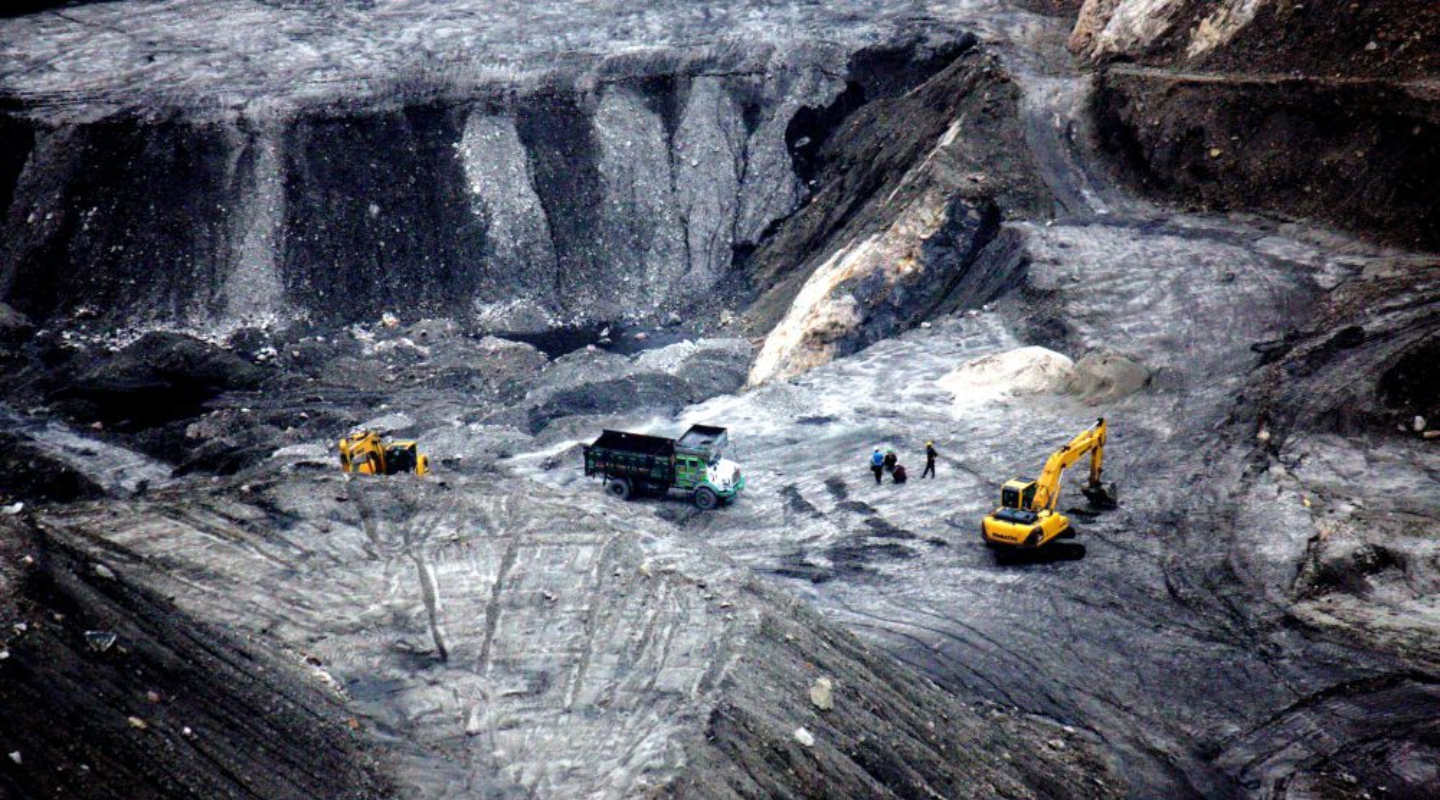 Coal mining in Bhutan. Source: Dechen Rabgyal.
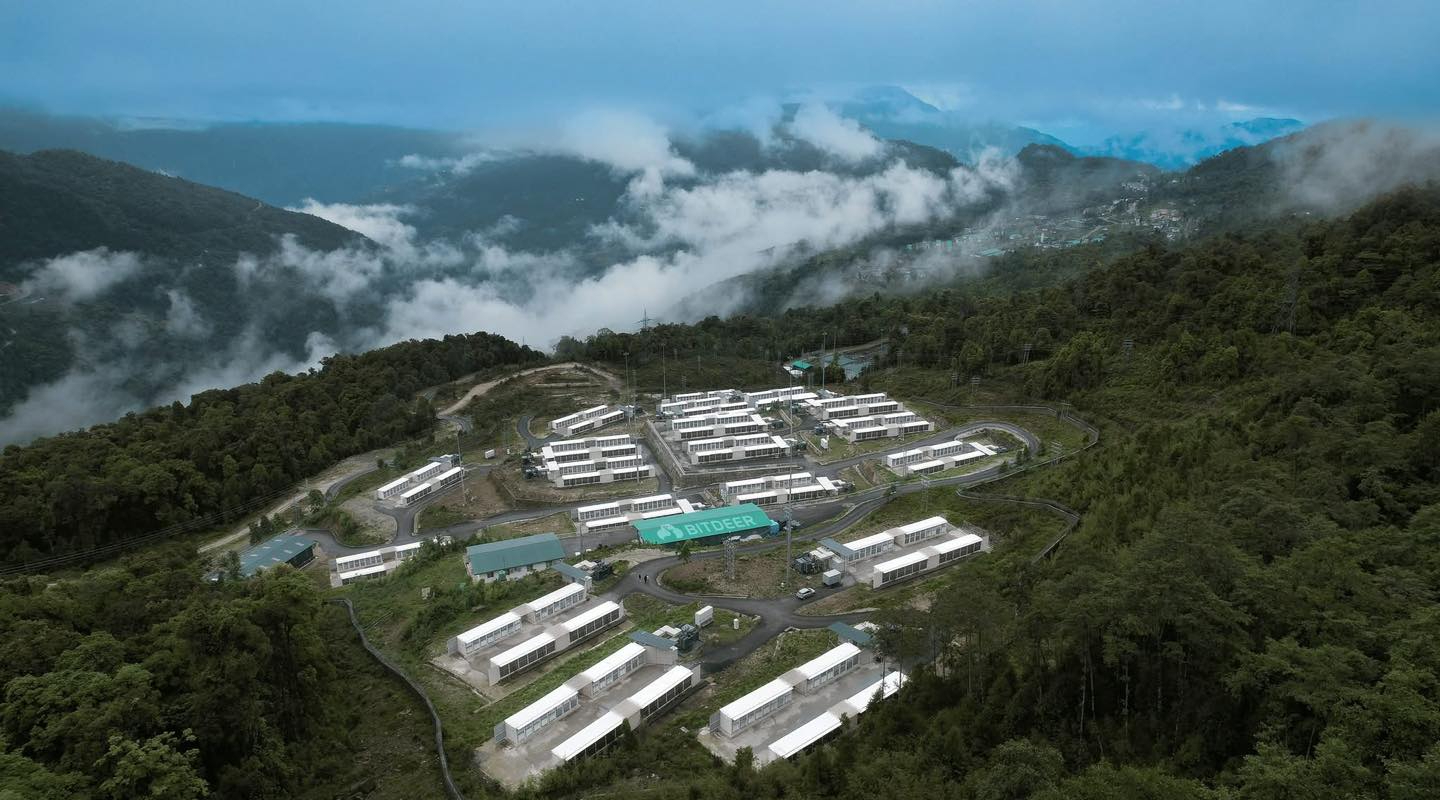 Bitdeer’s Bitcoin mine at Gedu, Bhutan. Source: Inside Bhutan.
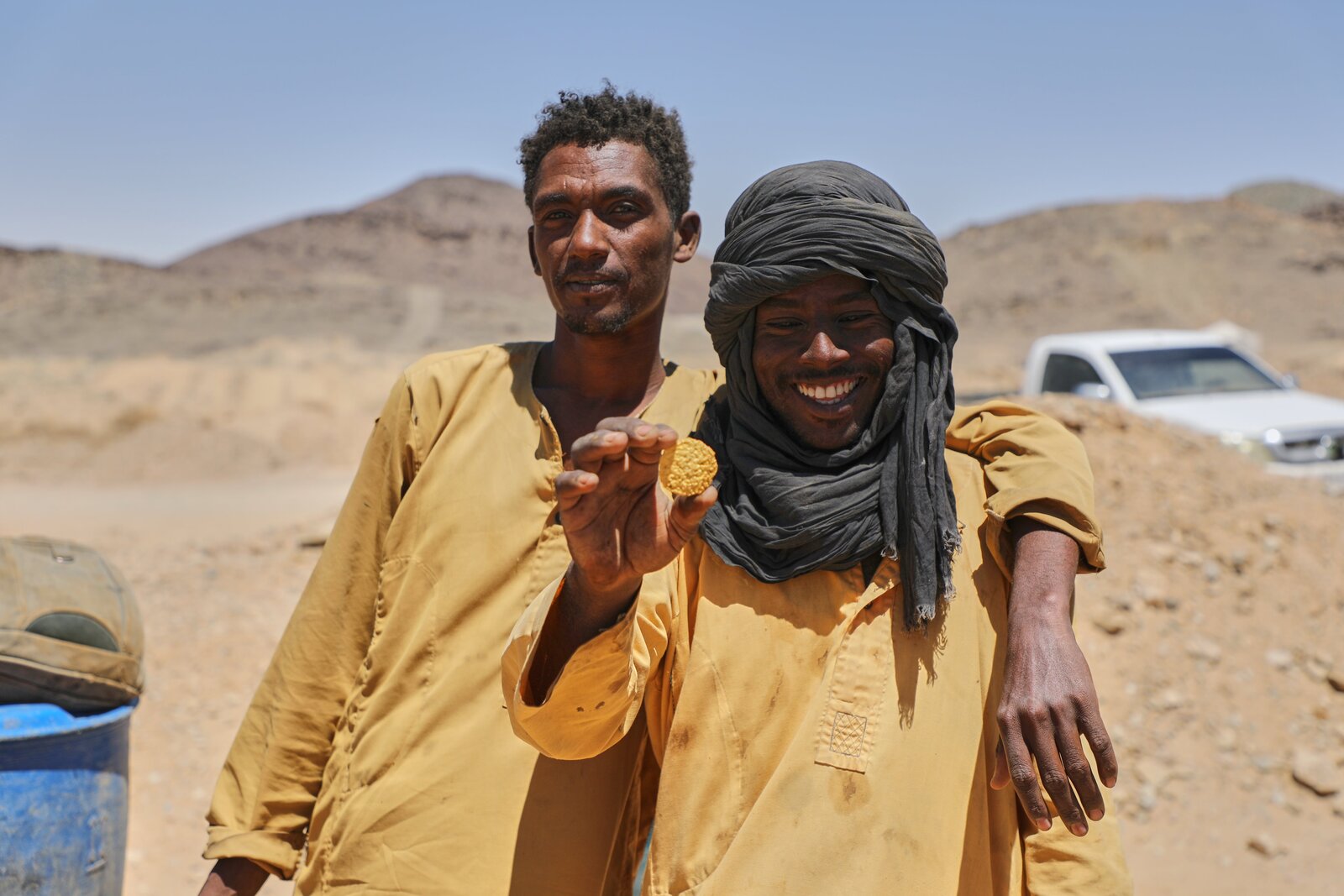 Gold miners in northern Sudan. Photo: Mohnd Blal, AP, via The Independent.
Miners are definitely not altruists. They secure the network because it pays, and Bhutan’s hoarding is a kind of crypto-mercantilism, only without the colonies. It could become economic activism for countries tied to the dollar, to IMF loans [124] or to the CFA franc [125], but only on three conditions: mining must not take power from people who need it, hardware and e-waste must be handled properly, and the state must be open about what it holds. (Well, at least if we want things to be ethical that is.)
Building these tools can come at a personal cost, even in the most “democratic” countries. In 2024 the US arrested the developers of Samourai Wallet.
They pleaded guilty to conspiracy to run an unlicensed money-transmitting business. In November 2025 Keonne Rodriguez got five years, and William Hill four [126]. Days later the makers of Wasabi Wallet blocked US users and shut down their privacy coordinator. A pardon petition has over 17,000 signatures [51]. In September 2026, supporters met at the gates of a prison in Arnhem, in the Netherlands, and ran to raise money for the two men [52].
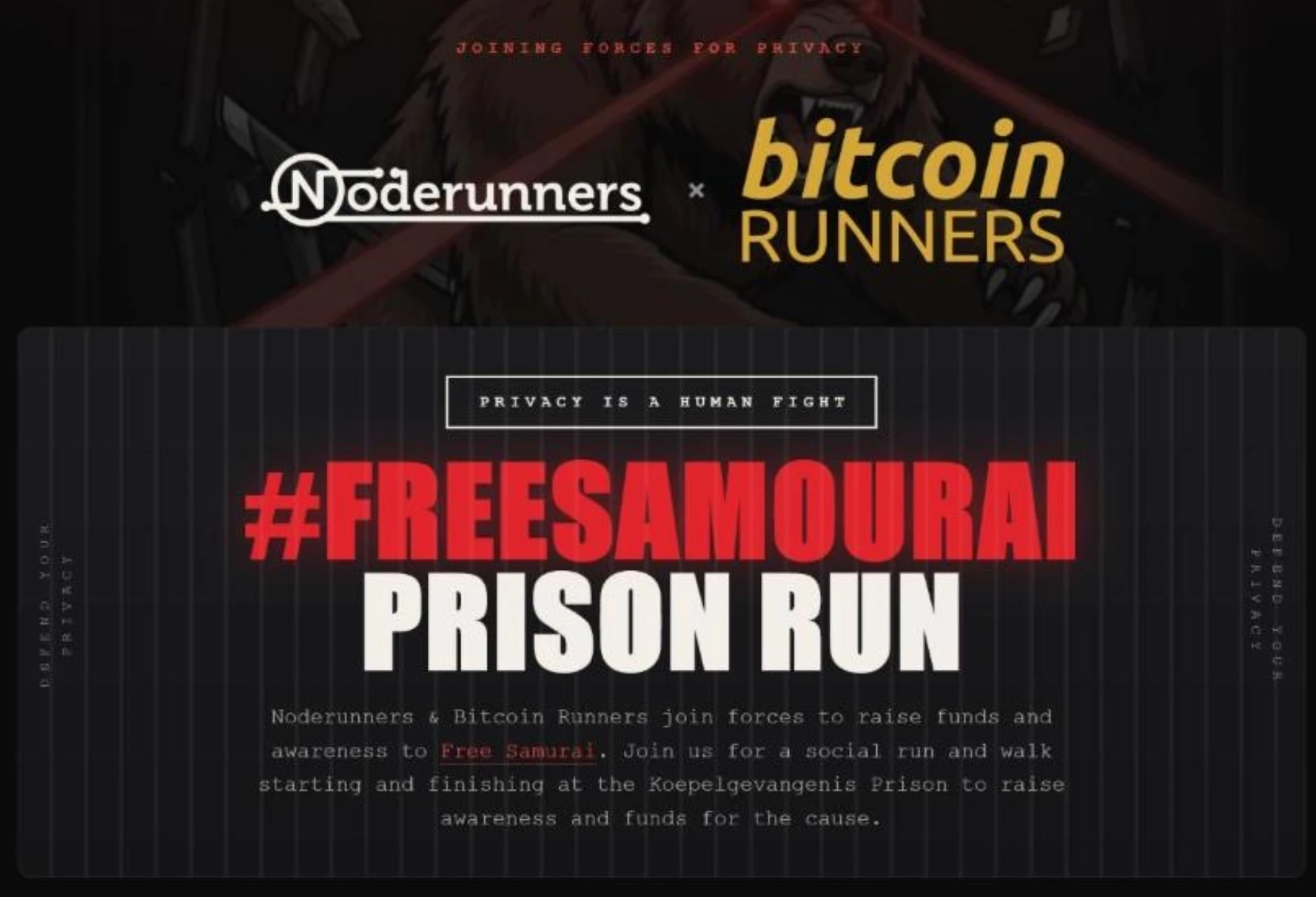 The Free Samourai Prison Run, Arnhem, 2026. Source: Noderunners and Bitcoin Runners.
Where it doesn’t work
The nation-states are the clearest. El Salvador made Bitcoin legal tender in 2021, but then signed a $1.4 billion IMF deal in 2025 and made accepting it voluntary. The government’s Chivo wallet has been handed to a private operator [104]. The Central African Republic gave up already in 2023. And what started in El Zonte as a grassroots experiment became an authoritarian president’s brand. Yikes.
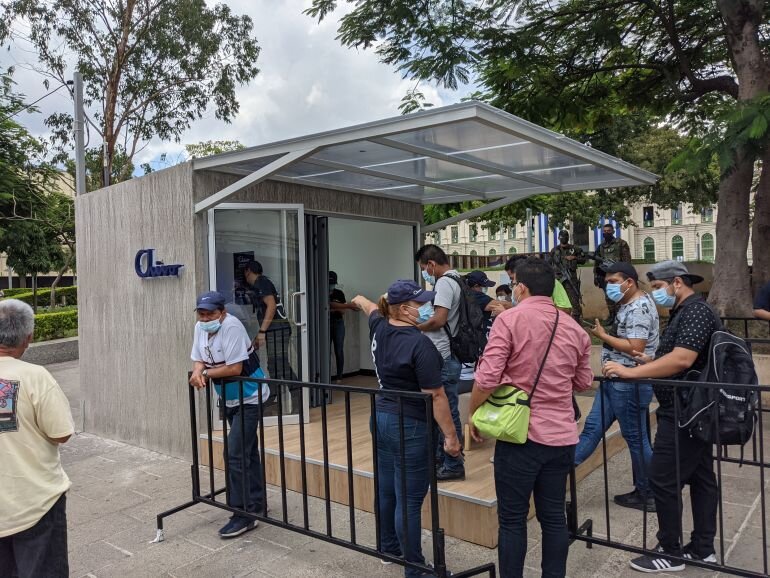 A queue at a Chivo ATM in El Salvador, 2021. Photo: John Dennehy, Al Jazeera.
Grassroots claims are fragile too. In 2024 a group of researchers spent seven months looking for the Bitcoin circular economies a charity claimed to run in Peru, and found “no evidence” of them [127].
And sometimes the nonviolent action is aimed at Bitcoin. In Villarrica, Paraguay, residents organised against a Bitfarms mine built less than fifty metres from their homes. The trial against its former site manager has been postponed again and again [128]. In 2023 the photographer Benjamin Von Wong and Greenpeace went further and built the “Skull of Satoshi”, an eleven-foot skull covered in electronic waste, to protest Bitcoin’s energy use [129].
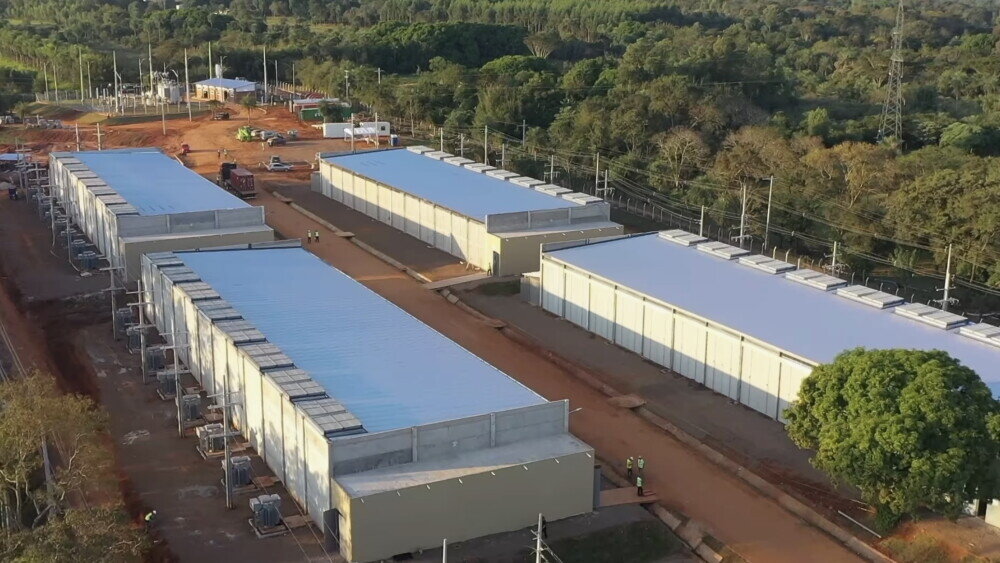 The Bitfarms mine beside homes in Villarrica, Paraguay. Source: Última Hora.
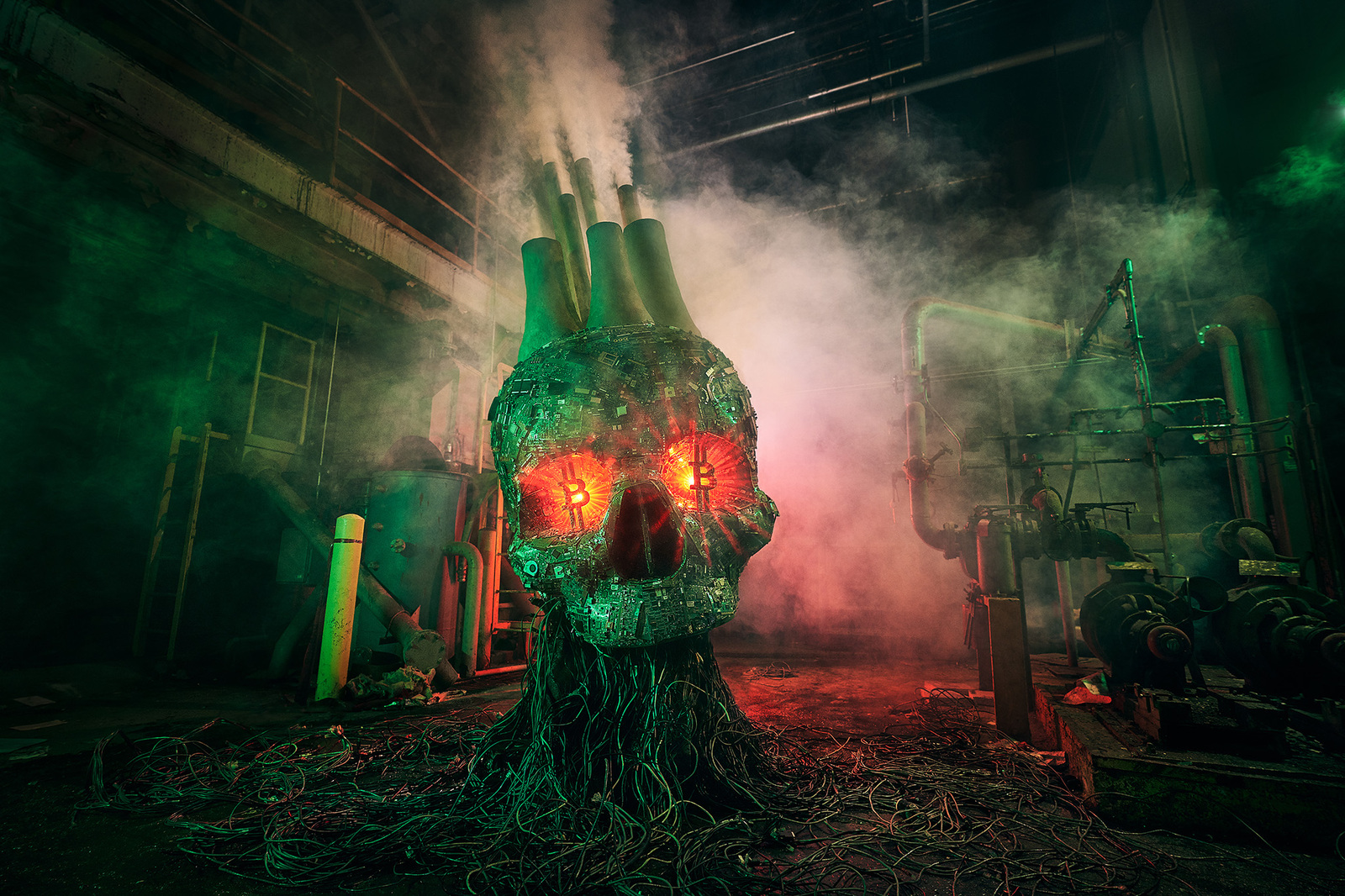 The Skull of Satoshi by Benjamin Von Wong, 2023. Source: Von Wong.
One more caveat. In several frontline cases, from Nepal to Venezuela, people reached for dollar stablecoins such as USDT more often than for bitcoin. Some of what looks like Bitcoin activism is really dollar activism on crypto rails.
Does any of it work?
Nonviolent action is usually judged by results, so it is fair to ask what all this has changed.
A few cases have a clear outcome. The Free Ross campaign collected petitions for a decade, and in January 2025 Ross Ulbricht walked out of prison with a pardon [50]. The Feminist Coalition’s bitcoin reached protesters in Lagos after their bank accounts were frozen [101]. In Canada, bitcoin got past the convoy’s frozen accounts too, but the state answered with court orders and seizures, and many of the donated wallets were never claimed [100].
Most outcomes are partial. Block’s campaign moved a tax bill through a House committee, but the exemption shrank to transaction fees of up to ten dollars [12]. The node operators who switched to Bitcoin Knots grew it to over a fifth of public nodes, yet Bitcoin Core shipped its change anyway [56]. And some ended in a cost rather than a result: the Samourai developers are in prison [126], and Russia keeps prosecuting people who donated to Navalny’s foundation [117].
Then there are the goals that cannot be measured yet. A circular economy succeeds by still existing next year. The separation of money and state has no finish line.
Erica Chenoweth and Maria Stephan, who studied 323 campaigns over a century, found that nonviolent campaigns succeed twice as often as violent ones, mostly because they draw far more people in [130]. That is where scattered activism is weakest. Each of these actions involves a handful of people, or a few thousand at most, and they rarely add up. Which brings me to the movement question.
Activism, not a movement
So there it is. Activism is something people do; a movement is something they belong to. Every case in Table 1 is activism in that plain sense: a nonviolent action taken by someone for a reason, with Bitcoin as the means. But does all that activism add up to a movement?
Figure 1. Four ways of acting together. The first three are activism; only the last is a movement in Diani’s sense. Most Bitcoin activism sits in the third column.
The sociologist Mario Diani compared the main definitions of a social movement and boiled them down to three features: informal networks between people and groups, a shared collective identity, and a conflict with an identified opponent [131]. Nigel Dodd, writing about Bitcoin in 2017, thought it qualified, calling it “arguably a social movement as much as it is a currency” [132].
I’m still not sure. The networks exist: meetups, conferences and Nostr connect Oskar in Frankfurt to Felix in Nairobi, at least loosely, and circular economies fund and copy each other.
The conflict exists only for some. For the Feminist Coalition, a Ugandan before the blackout or a Cuban paying with ecash, the opponent is clear enough, be it a regime, a bank or a state that controls the internet. For Block or the city of Lugano there is no opponent, only a market or a brand.
Collective identity is the weakest part. The ₿ logo and “not your keys” are symbols, and a Bitcoin treasury company and a woman in Herat paid in sats would hardly see each other as hearty comrades.
Much of this follows from who the actors are. Individuals such as Langalis or Oskar act alone and carry the risk themselves. Communities such as Bitcoin Beach or La IslaBTC build something and need it to keep working. Businesses such as Block or Tether do activism and marketing at once. States such as El Salvador or Bhutan adopt, hoard or regulate, and can drop the whole thing when an IMF loan inserts itself.
They also disagree, mostly without saying so, on how change happens: some put up posters because they think people only need to know, some refuse the state’s money, and some build an alternative and wait. They rarely coordinate, and sometimes one undercuts another, as when a state takes over a grassroots project or a company turns a protest slogan into an advert. The same thing happens inside Bitcoin. When node operators switched to Bitcoin Knots in 2025, their noncooperation was aimed at Bitcoin’s own developers [56].
My answer, then, is no, or at least not yet. By Diani’s measure Bitcoin is not one social movement but a constellation of micro-mobilisations. They appear where a grievance meets the tool, like a frozen bank account in Lagos or a social-media ban in Kathmandu, and fade when the pressure eases.
You can hold a sign behind the Fed chair, refuse the state’s money for eleven days or pay teachers in a refugee camp without joining anything, agreeing on a programme or even knowing that the others exist. What ties these actions together is not an organisation but the tool and the values designed into it: money that is hard to freeze or print away. Bitcoin requires no company and no identification. That is why this post is called Bitcoin activism and not the Bitcoin movement.
In my thesis, I argued that Bitcoin is a nonviolent tool. However, activism happens when people pick that tool up. When enough of them do so for the same reason at the same time, it starts to look like a movement, even if only for as long as the bank account stays frozen or the internet stays down.
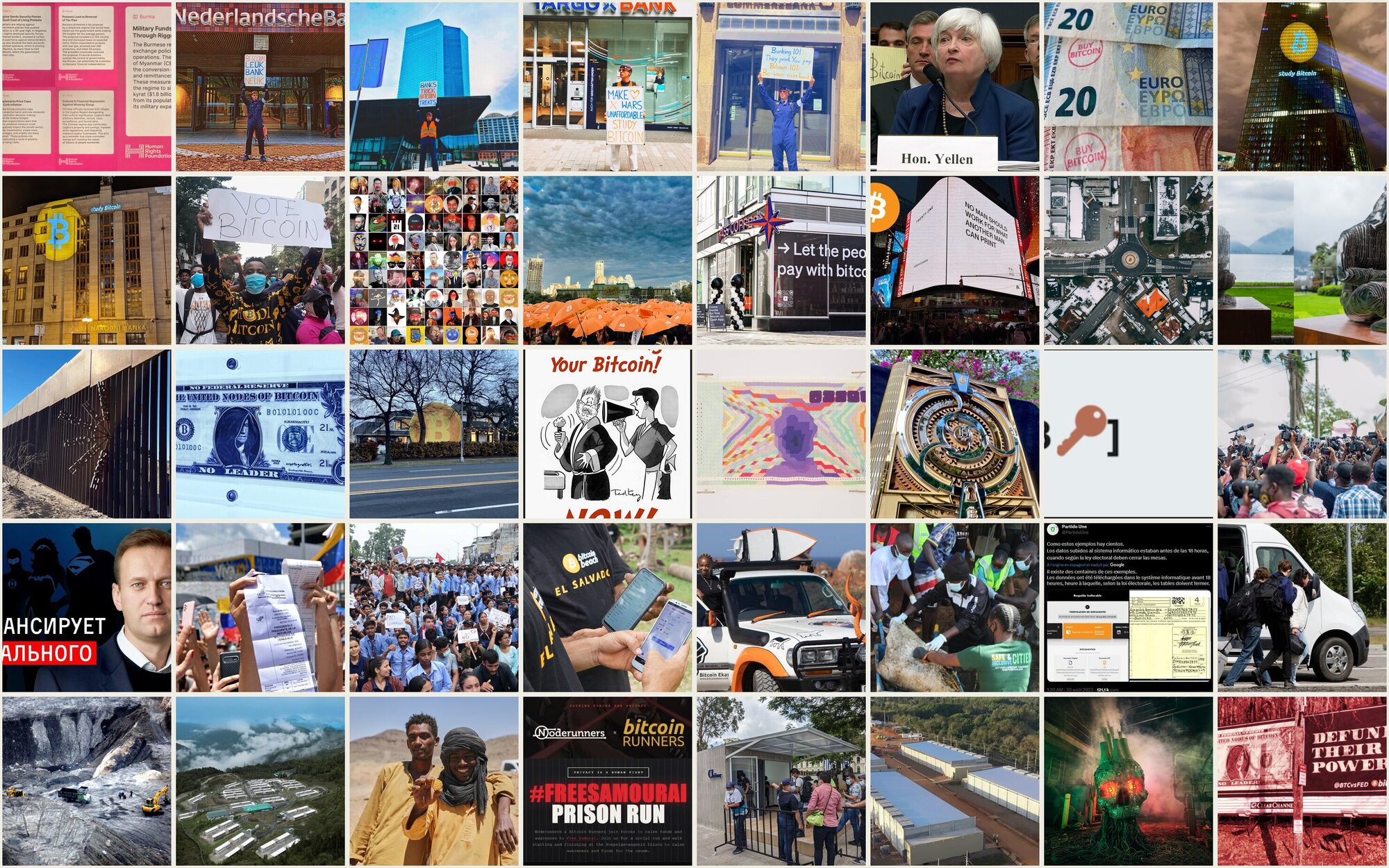 Every picture in this post, from Riga to the billboards.
Bibliography
- Why Bitcoin is freedom money
- Bitcoin as a nonviolent tool (master’s thesis)
- Michael Beer, Civil Resistance Tactics in the 21st Century
- Albert Einstein Institution, 198 Methods of Nonviolent Action (Gene Sharp)
- HRF, Bitcoin for Nonprofits
- House Financial Services Committee, hearing with Janet Yellen (2017)
- Phneep, Bitcoin propaganda posters
- Ntapanta, Imagining Bitcoin, Ethnos (2026)
- Decrypt, The man who raised Bitcoin billboards across America
- Cryptograffiti, The United Nodes of Bitcoin
- Cryptograffiti, Be Your Own Bank trucks
- Block, Bitcoin Is Everyday Money campaign
- Block, Bitcoin Does
- TechStory, Jack Mallers’ Times Square Bitcoin billboard (2025)
- Little Hodler Bitcoin pin
- Frankfurter Rundschau, Oskar Hassel outside the ECB
- Free Keene, Bitcoin Gandhi leads 24-day march across New Hampshire
- Bitcoin Argentina, about the community
- “Study Bitcoin” projection in Frankfurt (2023)
- Decrypt, Bitcoin ‘burns’ the dollar in augmented reality artwork (2020)
- bitcoin.rocks, stickers
- Reddit, stamping Bitcoin on banknotes
- Block 629,999, mempool.space
- Matthias Dörfelt, Block Bills (2017)
- Timechain Art Magazine
- #LaserRayUntil100K, the laser-eyes meme (2021)
- Scarce City, BORDERLESS sculpture by Cryptograffiti
- Love is Bitcoin, spot the Bitcoiner’s house
- BTC Prague, cypherpunk art arrives in BTC Prague (FractalEncrypt)
- Decrypt, Why a giant inflatable Bitcoin rat stands at the birthplace of the Fed
- Tether, Satoshi statue unveiled in Lugano
- Bitcoin Austria, Satoshi statue unveiled in Vienna (2026)
- Statue of Satoshi, Budapest unveiling
- The world’s first blockchain monument
- Comune di Fornelli, inauguration of the Bitcoin and Satoshi monument
- LABITCONF, El Génesis de Satoshi Nakamoto monument
- Tatiana Moroz, Never Give Up
- Wonderabbit, Prometheus
- Happenstance, a Bitcoin drama (New York, 2024)
- LABITCONF, Premio B·Arte 2024
- HRF, Financial Freedom track at the Oslo Freedom Forum
- Terahash, Bitcoin im Bundestag
- Africa Bitcoin Community, youth programme
- HRF, Financial Freedom Report 21 (Félix Maradiaga)
- Câmara dos Deputados, hearing on a sovereign Bitcoin reserve (2025)
- Bitcoin Policy UK, letter to the City Minister on Chase UK
- Seoul Bitcoin Meetup, statement on SegWit2x (2017)
- Louisiana Legislature, HB488 / Act 700 (2024)
- Swiss Bitcoin Initiative, FAQ
- Decrypt, Ross Ulbricht thanks Trump for pardon (2025)
- Free Samourai petition
- Bitcoin Runners, Free Samourai Prison Run (2026)
- Proof of Keys
- Collectif Sortie de Banque
- #BoycottJPMorgan post, November 2025
- Bitcoin News, Bitcoin Knots reaches a quarter of public nodes (2025)
- BIP148, user-activated soft fork for SegWit (2017)
- CoinDesk, UASF revisited: will Bitcoin’s user revolt leave a lasting legacy? (2017)
- Radio Prague, Bitcoin Coffee at Paralelní Polis
- Tio.ch, a month on Bitcoin in Lugano
- Martin Zandona, Swiss Bitcoin Tour
- BitcoinFriendlySA, Proof of Spend
- CeylonCash, a year of Bitcoin salaries in Sri Lanka
- Chainalysis, Iranian crypto activity, 2026
- Reddit, running a full node in China
- Decrypt, BitChat surges in Nepal
- Cointelegraph, 48,000 Nepalis install Jack Dorsey’s Bitchat amid protests (reporting Calle’s post)
- Calle on Nostr, “bitchat downloads spiking in #madagascar” (28 September 2025)
- Bobi Wine on X, “Have you downloaded Bitchat yet?” (13 January 2026)
- Bitcoin NGO guide (Airlift Airwaves, Tonga)
- HRF, AI Hack for Freedom winners (Pathos)
- Cryptobuyer, Venezuela’s first Bitcoin satellite node (2020)
- HKmap.live, official post on r/HongKong (2019)
- La IslaBTC
- Bitcoin Beach
- Bitcoin Berlin, El Salvador
- CriptoNoticias, businesses in Berlin and La Laguna accept Bitcoin
- Bitcoin Economy Confederation, Bitcoin La Pirraya
- Bitcoin Economy Confederation, Bitcoin Lake
- Bitcoin Economy Confederation, Bitcoin Jungle
- Cuba Bitcoin
- Bitcoin Economy Confederation, final statement
- Bitcoin Ekasi, August 2026 project update
- Circular Bitcoin Africa Fund
- Afribit Africa, programmes
- The Core, Githurai circular economy
- Bitcoin Dua
- Bitcoin Indonesia
- Brindon Mwiine, a Bitcoin school in rural Bugiri
- BYSOL, history
- Open Dialogue Foundation, testimonials on misuse of AML rules (Digital Belarus)
- Roya Mahboob, What Bitcoin gave Afghan women that banks could not
- Al Jazeera, Iran crypto developers launch platform for flood victim aid (2019)
- Stephan Livera Podcast 388, Meron Estefanos
- Operation Broken Silence, crypto funds teachers in Yida refugee camp
- HRF, grants to 16 freedom tech projects (Flash)
- HRF, grants to 22 freedom tech projects (SudaBit)
- Anjan Sundaram, Stringer News
- Bitcoin Magazine, WikiLeaks public donation address
- CBC, money flowed to convoy protesters through cash and a cryptocurrency campaign (2022)
- Feminist Coalition, #EndSARS accounting statement
- Gridless
- SimpleProof, case studies (Guatemala 2023 election)
- IMF, El Salvador program review
- Forbes, How Bhutan quietly built its Bitcoin holdings
- The White House, Strategic Bitcoin Reserve executive order
- Texas Legislature, SB 21
- Dawn, Pakistan announces strategic Bitcoin reserve
- A Cypherpunk’s Manifesto
- Value neutrality in technology
- Affordance
- “Consensus is King”, mempool.space
- Segwit anniversary message, mempool.space
- Lugano Plan ₿
- Valentina Picozzi
- Wikipedia, Goddess of Democracy
- Mediazona, prosecutions of FBK donors
- Carter Center, Venezuela 2024 election report
- Reuters via MarketScreener, Ugandans and Iranians turn to BitChat
- CNA, offline messaging apps join India’s protest toolkit
- TechCrunch, BitChat removed from India’s app stores
- Helping to Leave
- Genocide Watch, UAE-RSF gold mines fund genocide in Sudan
- Alex Gladstein, Hidden repression
- Mises Institute, Africa’s way out of monetary colonialism
- DOJ, Samourai sentencing
- Howson et al., Political Geography (2024)
- Última Hora, Villarrica trial delays
- Benjamin Von Wong, the Skull of Satoshi (2023)
- BBC Future, the 3.5% rule: how a small minority can change the world (Chenoweth and Stephan)
- Mario Diani, The concept of social movement, The Sociological Review (1992)
- Nigel Dodd, The Social Life of Bitcoin (2017)