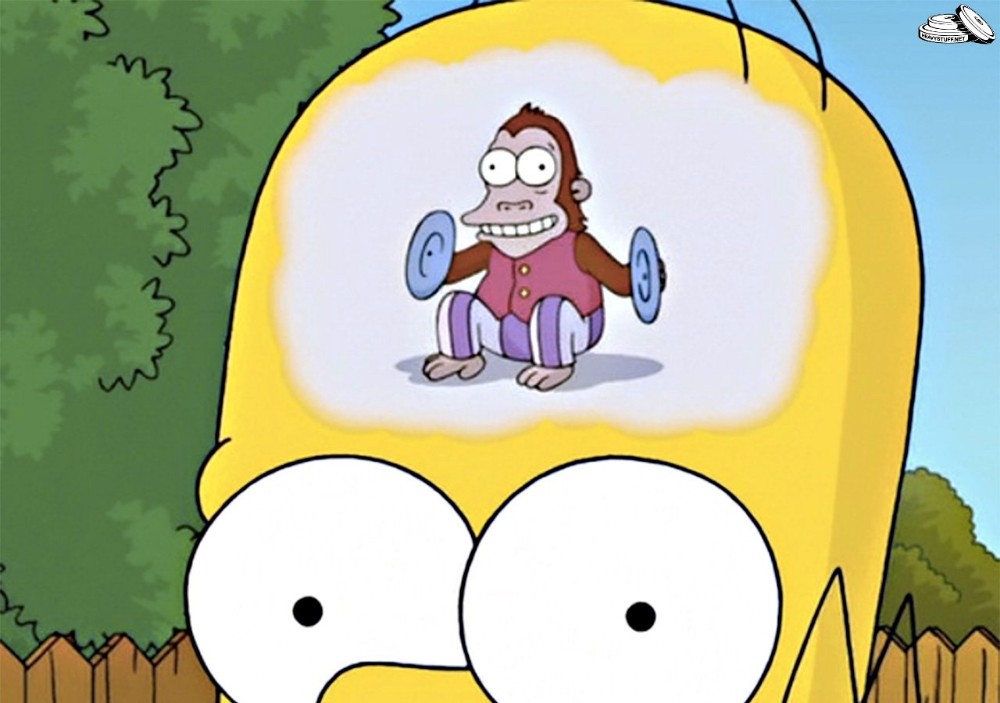
The days demand constant mental effort: decisions stack upon decisions, questions require answers, problems need solving. Work exhausts us cognitively and emotionally, whether through relentless complexity or soul-crushing repetition. Either way, by evening the body and mind is kaput.
Then we scroll through feeds of news and stories, binge videos, and let our minds dissolve into a smorgasbord of a “brainrot”. The Finns call it “aivot narikkaan”—brain in the cloakroom. Like checking your coat at the door, we check our consciousness and surrender to numbness. And we dare call this relaxation? I know I did before my very first meditation retreat.
Having now meditated extensively, I can’t but wonder: Why did I think this way? And what if we’re training ourselves into a particular kind of mental deterioration, one that feels so normal we can’t recognise it as harm?
Brainrot
The idea of relaxing your brain, ignoring it and “stop thinking thoughts” is absurd. In reality, there will be thoughts notwithstanding, but you no longer pay attention to whatever goes on in there. You’re not stopping thoughts—you’re just stopping your attention to them. Thoughts continue to arise, but now you’re not watching. You’ve gone unconscious while still awake. A sleepwalker.
I think there’s a lot of sleepwalkers everywhere. Most chillingly, when they find themselves in leadership roles of our countries and companies, is the moment when things can get out of hand, for example war. A sleepwalker doesn’t know they are sleepwalking. It is the Dunning-Kruger of mindfulness itself.
To brainrot is to attend to “nowhere,” which is to say, everywhere. Because the sensations of your whole body become so non-specific but gross and broad, your attention is effectively everywhere, and you cannot really discern where, exactly, it lies from moment to moment. Attention can be so extremely fast to even discern it.
The danger lies in how this becomes so etched into standard way of being that the mental state it occupies becomes new normal throughout the day, and not just during or after work. When this happens, it becomes difficult to escape this mode of being. Thinking remains very shallow, and attention-as-a-skill becomes a lazy “muscle” in the grand orchestra of the mind.
As the systems-thinker and philosopher Esa Saarinen puts it, thinking stays surface-level, a constant background static of repetitive, disoriented mental chatter; It’s like thought-tinnitus, a buzzing that prevents clear thinking and never resolves into anything meaningful. And as I put it: A disoriented mind is a monkey mind, is a reactive mind. A reactive mind leads to fear. And fear is the path to the dark side. Fear leads to anger, anger leads to hate, hate leads to suffering.
The workplace often reinforces this pattern. Eight hours of either grinding complexity or mind-numbing routine, and you come home still mentally at work. The thoughts don’t stop. I remember I was still thinking of business processes and cryptocurrencies after my work. Then I escaped through distraction. But when you’ve spent your workday in this scattered state, you’ve strengthened the very pattern you’re trying to escape. It becomes a cycle: work scatters your attention, so you seek distraction, which further scatters your attention, making work feel worse, leading to more distraction within the mind.
Juxtaposition
Let’s go back in time a little. In my youth, working in assembly lines and mowing lawns, I learned something dangerous from the veterans. They modelled a specific approach to monotonous labour: turn off your mind, let the body go through motions, disappear into the routine. It seemed wise at the time—a survival strategy for boring work. The thinking brain did this quite automatically, voluntarily, and instinctively as well. This is the Kahneman’s System 1 of Thinking, Fast and Slow.
Years later, sitting in university lecture halls after summers of work, I noticed something odd, a juxtaposition. The quality and content of my thinking had shifted. During those long summer days of “lowing the mawn”, my thoughts had become shallow, scattered, and repetitive. I had accidentally trained myself not to attend to my own thinking. Worse, I had at the same time trained myself not to be present in the moment either. This was the first time I became aware of how important it is to be mindful, even the most dull moments. Because when the dullness is not appreciated, then the mind is wrapped in such a place hard to escape even in the most beautiful moments of life. One is truly awake a few seconds of their life every day. It is that sensation in the mind that calls you to notice.
What does it even mean to be present of the moment? It is being mindful, or having the “attention to and awareness of the present moment”. Practically, it means that you’d be aware of each and all sensation that happens within the mind-body framework, from moment to moment, continuously. That can be the stream of thoughts, the coldness of your feet, the dryness of your nose, the heaviness of your eyes, the shallow breathing, the pain the your chest, the strain in your lower back, or the overt enthusiasm of your overall state. Oddly specific, but this is me, currently!
Thus, when I trained inattention—specifically to “thought-stimuli”—I had trained my mind not to attend at all. Later that habit for inattention spreads to any stimuli, and hence be less mindful on the whole. I wasn’t resting my brain. I was learning not to notice anything, first not my thoughts, and then not my body, and not the present moment. It could have happened in other sequences, too. My awareness became diffuse and spread everywhere, and thus, nowhere at once.
In one psychology course long ago, I learned that constantly checking your phone damages attention and well-being, perhaps even relationships. Fair enough. But they never taught the crucial follow-up: what to do instead, and how. Or at least, I missed that part. There were no lectures on what captures ‘a sensation’ either. I learned about emotions in an intellectual level, but not on an experiential level.
This knowledge was without wisdom. It didn’t translate to anything meaningful. I can tell myself I shouldn’t check social media, should stay present, or should think more deeply. But knowing you shouldn’t do something doesn’t stop you from doing it. That’s an intellectual game, not embodied practice. I was missing something… a missing piece that would tie up all that knowledge.
Vipassana
After a hundred of hours of intensive, intentional Vipassana-meditation practice in my first retreat, I finally understood it: One can observe the thought-stream itself, among other things in such an opening way that even magic mushrooms won’t do that. You can’t stop the stream, but you can watch it with clarity. You can look at it with curiosity and openness, gently and non-judgmentally.
In the ten-day silent retreats, practicing the Vipassana technique, thoughts slow dramatically over the days. What’s usually a rushing river becomes a trickle—maybe one or two thoughts per hour. It’s a bliss, equanimity at it’s best (that I’ve so far observed). Not because I suppressed anything, but because I stopped fuelling the fire. Thoughts arise and dissolve without the need to grab onto them and make stories in the head. Let them be.
This is trainable skill, not mystical gift. As you practice, something shifts in your relationship to thinking. Thoughts stop being “yours” in the possessive sense. They’re just phenomena arising in consciousness, like clouds arising and passing through sky. You can remain calm even when uncomfortable thoughts appear, because you’re no longer identified with them. My psychologist saw the difference in me and pointed how “dynamic” my mind had become. My good friend said that I seemed much more at peace with myself.
Vipassana teaches an art of life as Goenka puts it, where every moment, every sensation, every breath, every thought is acknowledged, observed, and witnessed without attachment. Things arise, things pass away, and soon the compulsion to “brainrot” disappears. You don’t need to put your “brain in the cloakroom” because being present is no longer exhausting. This is the peace of mind.
 Ville
Ville 
Leave a comment